MEDINDIA
 English
 हिन्दी
 Español
 français
 中文
中文
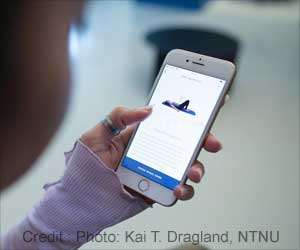
The jealous behavior when men and women find social media messages indicating their partner's infidelity, is the same they have on finding offline evidence.


Infidelity
The Internet and the mobile phone with their instant connectivity are fast fuelling the incidence of infidelity in the modern world.
The Internet and the mobile phone with their instant connectivity are fast fuelling the incidence of infidelity in the modern world.
TOP INSIGHT

Men felt more distressed when they read social media messages that revealed their partners' sexual rather than emotional infidelity.
However, women were more upset than men in response to emotional messages. The researchers also found that women were significantly more upset when a potential rival had written the message, compared to when it was composed by their own partners. For men, the opposite seemed to be true and they appeared to be more upset by imagining their partner sending rather than receiving an infidelity-revealing message. Irrespective of the contents, women overall were more upset than men when they had to imagine discovering an infidelity-related message.
The study supports evolutionarily derived theories that hold that there are differences in what triggers jealousy among men and women, and in how they subsequently direct such feelings towards the cheating partner or the potential rival.

Men Hate Sexual Infidelity, Women Hate Emotional Infidelity
Researchers now show that men and women react differently to various types of infidelity and evolutionary psychology may help explain why this may be.
Researchers now show that men and women react differently to various types of infidelity and evolutionary psychology may help explain why this may be.
"Applying an evolutionary perspective to understanding the manifestation of jealous behaviour and how infidelity-related anger can trigger partner dissolution and domestic abuse may help counteract inevitable rises in such behaviours in an age where clandestine extra-marital relationships are facilitated by modern forms of media technology," explains Dunn.

Infidelity Online can Vary from Person to Person
A research based on an anonymous online survey among 20 to 73-year-olds, confirmed that many participants think that the internet makes infidelity more likely.
A research based on an anonymous online survey among 20 to 73-year-olds, confirmed that many participants think that the internet makes infidelity more likely.
Source-Eurekalert

Experts Say Emotional Infidelity can be Worse Than Sexual Affairs
Emotional infidelity is often worse than a sexual affair, relationship experts have opined.
Emotional infidelity is often worse than a sexual affair, relationship experts have opined.
 Email
Email