MEDINDIA
 English
 हिन्दी
 Español
 français
 中文
中文
Whole organ tissue engineered transplants of the human trachea done by using stem cells was earlier regarded as a breakthrough in regenerative medicine

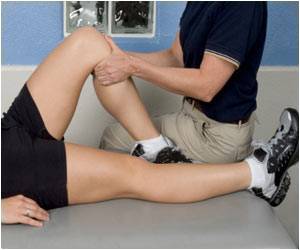
Meniscus Transplantation Has a 95 Percent Success Rate in Knee Pain
Meniscal allograft transplantation (MAT) surgery patients see an overall success rate of 95 percent after an average five-year follow-up.
Meniscal allograft transplantation (MAT) surgery patients see an overall success rate of 95 percent after an average five-year follow-up.
"Major medical breakthroughs deserve the necessary press attention to inform the medical community and public of the news," say Pierre R. Delaere, MD, PhD, and Dirk Van Raemdonck, MD, PhD, from the Department of Otolaryngology Head & Neck Surgery and the Department of Thoracic Surgery, University Hospital Leuven, Belgium. "Unfortunately, misrepresentation of medical information can occur and is particularly problematic when members of the professional and public press are misled to believe unrealistic medical breakthroughs."
The authors raise doubts regarding whether a synthetic tube can transform into a viable airway tube, pointing out that the mechanism behind the transformation from nonviable construct to viable airway cannot be explained with our current knowledge of tissue healing, tissue transplantation, and tissue regeneration. "Cells have never been observed to adhere, grow, and regenerate into complex tissues when applied to an avascular or synthetic scaffold and, moreover, this advanced form of tissue regeneration has never been observed in laboratory-based research," say the authors.
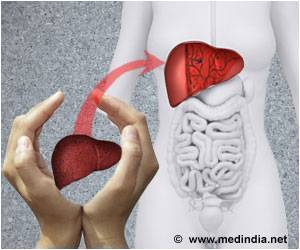
India Emerging as Liver Transplant Hub, Says Expert
Health expert says India is emerging as a global hub for liver transplant with expanded medical facilities.
Health expert says India is emerging as a global hub for liver transplant with expanded medical facilities.
"The results show that mortality and morbidity were very high. Several patients died within a three-month period, and the patients who survived longer functioned with an airway stent that preserved the airway lumen," they observe.

Beards Get Trendy, Facial Hair Transplants on the Rise
Moustaches, sideburns, beards and other facial hair trends are in vogue these days and this has triggered a rise in facial hair transplants.
Moustaches, sideburns, beards and other facial hair trends are in vogue these days and this has triggered a rise in facial hair transplants.
Publication of these papers in highly ranked medical journals is attributable to the media hype regarding ''stem cells'' and the work done on an airway that is less accessible for direct visualization, say Delaere and Van Raemdonck.
Source-Eurekalert
 Email
Email