MEDINDIA
 English
 हिन्दी
 Español
 français
 中文
中文
The way in which an organism can create a biological memory of some variable condition, such as quality of nutrition or temperature has been explained in a study
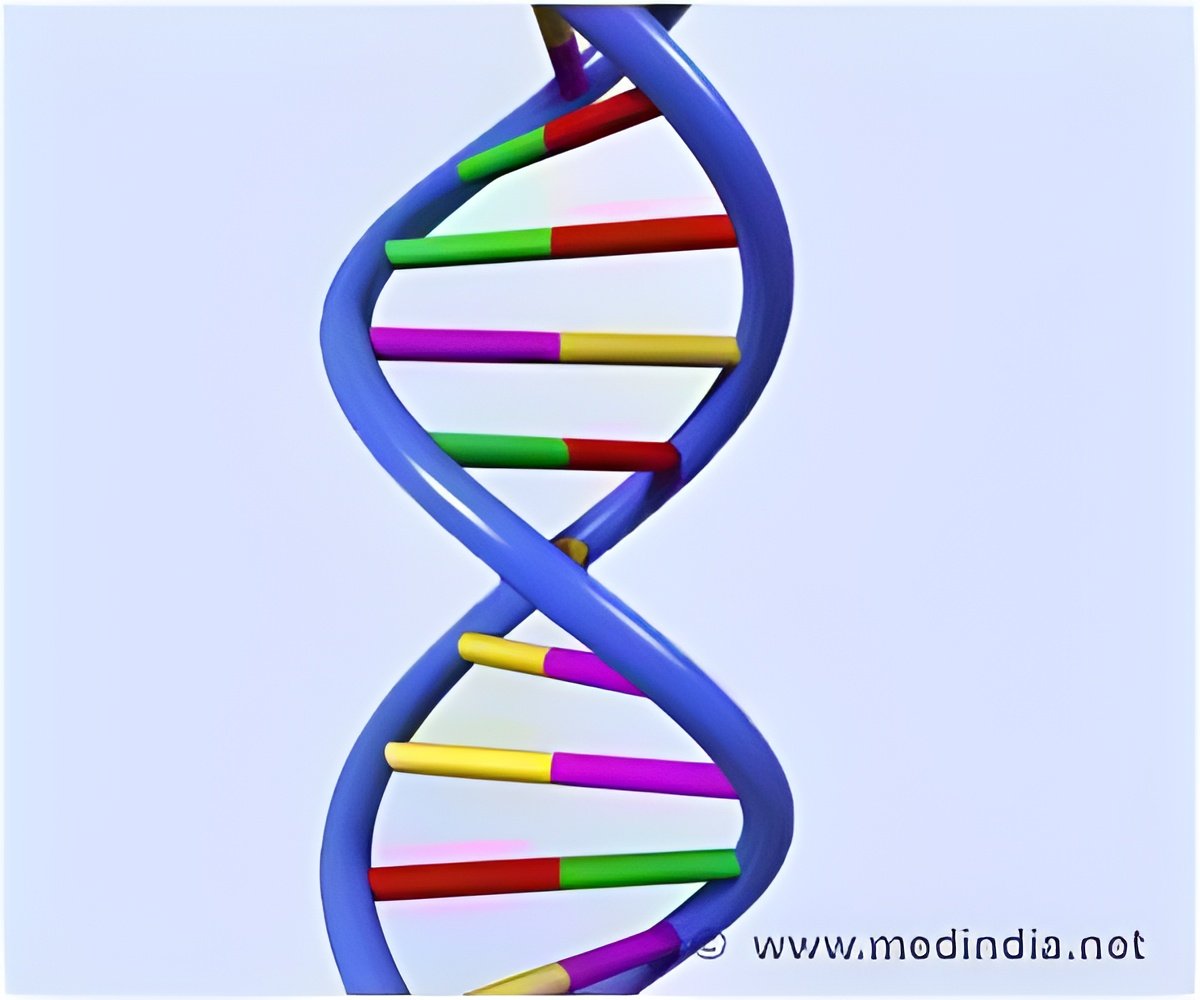

Genetic Counselling - Steps GeneticInheritance Risks Conclusion
Encyclopedia section of medindia gives general info about Genetic counseling
Encyclopedia section of medindia gives general info about Genetic counseling
For example, some studies have shown that in families where there was a severe food shortage in the grandparents' generation, the children and grandchildren have a greater risk of cardiovascular disease and diabetes, which could be explained by epigenetic memory. But until now there hasn't been a clear mechanism to explain how individuals could develop a "memory" of a variable factor, such as nutrition.
The team used the example of how plants "remember" the length of the cold winter period in order to exquisitely time flowering so that pollination, development, seed dispersal and germination can all happen at the appropriate time.

About Genetic Testing
Genetic testing helps to confirm a genetic condition in an individual and involves q complex laboratory techniques
Genetic testing helps to confirm a genetic condition in an individual and involves q complex laboratory techniques
Using a combination of mathematical modelling and experimental analysis the team has uncovered the system by which a key gene called FLC is either completely off or completely on in any one cell and also later in its progeny. They found that the longer the cold period, the higher the proportion of cells that have FLC stably flipped to the off position. This delays flowering and is down to a phenomenon known as epigenetic memory.
Epigenetics
In the recent years ‘epigenetics’ represents inheritable changes in gene expression that do not include DNA alterations.
In the recent years ‘epigenetics’ represents inheritable changes in gene expression that do not include DNA alterations.
Together with Dr Andrew Angel (also at the John Innes Centre), Professor Howard produced a mathematical model of the FLC system. The model predicted that inside each individual cell, the FLC gene should be either completely activated or completely silenced, with the fraction of cells switching to the silenced state increasing with longer periods of cold.
Dr Song also showed that the histone proteins near the FLC gene were modified during the cold period, in such a way that would account for the switching off of the gene.
Professor Douglas Kell, Chief Executive, BBSRC said "This work not only gives us insight into a phenomenon that is crucial for future food security – the timing of flowering according to climate variation – but it uncovers an important mechanism that is at play right across biology. This is a great example of where the research that BBSRC funds can provide not only a focus on real life problems, but also a grounding in the fundamental tenets of biology that will underpin the future of the field. It also demonstrates the value of multidisciplinary working at the interface between biology, physics and mathematics."
Source-Eurekalert
 Email
Email