MEDINDIA
 English
 हिन्दी
 Español
 français
 中文
中文
Ischemic stroke patients do not receive life-saving treatment intravenous (IV) alteplase, study at the Georgia State University found.
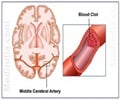
Stroke – Early Warning Signs - Risk Factor - Rehab - Treatment
Stroke can cause permanent disability and it is important to recognize its early warning signs to stop its progress. Early warning signs of stroke include sudden weakness of facial muscles.
Stroke can cause permanent disability and it is important to recognize its early warning signs to stop its progress. Early warning signs of stroke include sudden weakness of facial muscles.
TOP INSIGHT

Intravenous alteplase reduces disability and improves functionality among acute ischemic stroke patients.
"Clinicians may be hesitant to administer IV alteplase because of concerns about the drug's complications, which can include bleeding," said Dr. Moges Ido, the study's lead author and a part-time instructor at Georgia State's School of Public Health. "But this study indicates that unless major contraindications are present, patients should be offered this treatment as a life-saving measure."
The study authors examined data from 9,620 patients who were treated at 48 hospitals. They excluded patients who weren't eligible to receive the treatment because of contraindications, such as a recent history of brain surgery. Only a quarter of the eligible patients received IV alteplase.

Heat Stroke - Causes - Symptoms - Treatment - FAQs
Heat stroke is caused when body temperature or hyperthermia exceeds 40.6°C or 105.1°F. Heat stroke can be triggered due to overwork during summer months and lack of perspiration.
Heat stroke is caused when body temperature or hyperthermia exceeds 40.6°C or 105.1°F. Heat stroke can be triggered due to overwork during summer months and lack of perspiration.
Source-Eurekalert
How to Deal with a Stroke - Signs - Symptoms - Risk Factors - Prevention
Stroke is a brain attack, which occurs when the blood supply to the brain is interrupted. It affects all age groups; according to the WHO, 15 million people are affected by stroke annually.
Stroke is a brain attack, which occurs when the blood supply to the brain is interrupted. It affects all age groups; according to the WHO, 15 million people are affected by stroke annually.
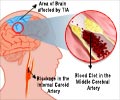
Transient Ischemic Attack - Risk Factors Symptoms Diagnosis Treatment FAQs
Transient Ischemic Attack is a mini stroke caused due to interruption in the blood supply to the brain leading to symptoms which last for a short time.
Transient Ischemic Attack is a mini stroke caused due to interruption in the blood supply to the brain leading to symptoms which last for a short time.
 Email
Email