MEDINDIA
 English
 हिन्दी
 Español
 français
 中文
中文
Sophisticated array of microphones and a software for sound analysis allowed researchers to figure out the sound of mice with up to 97 percent accuracy
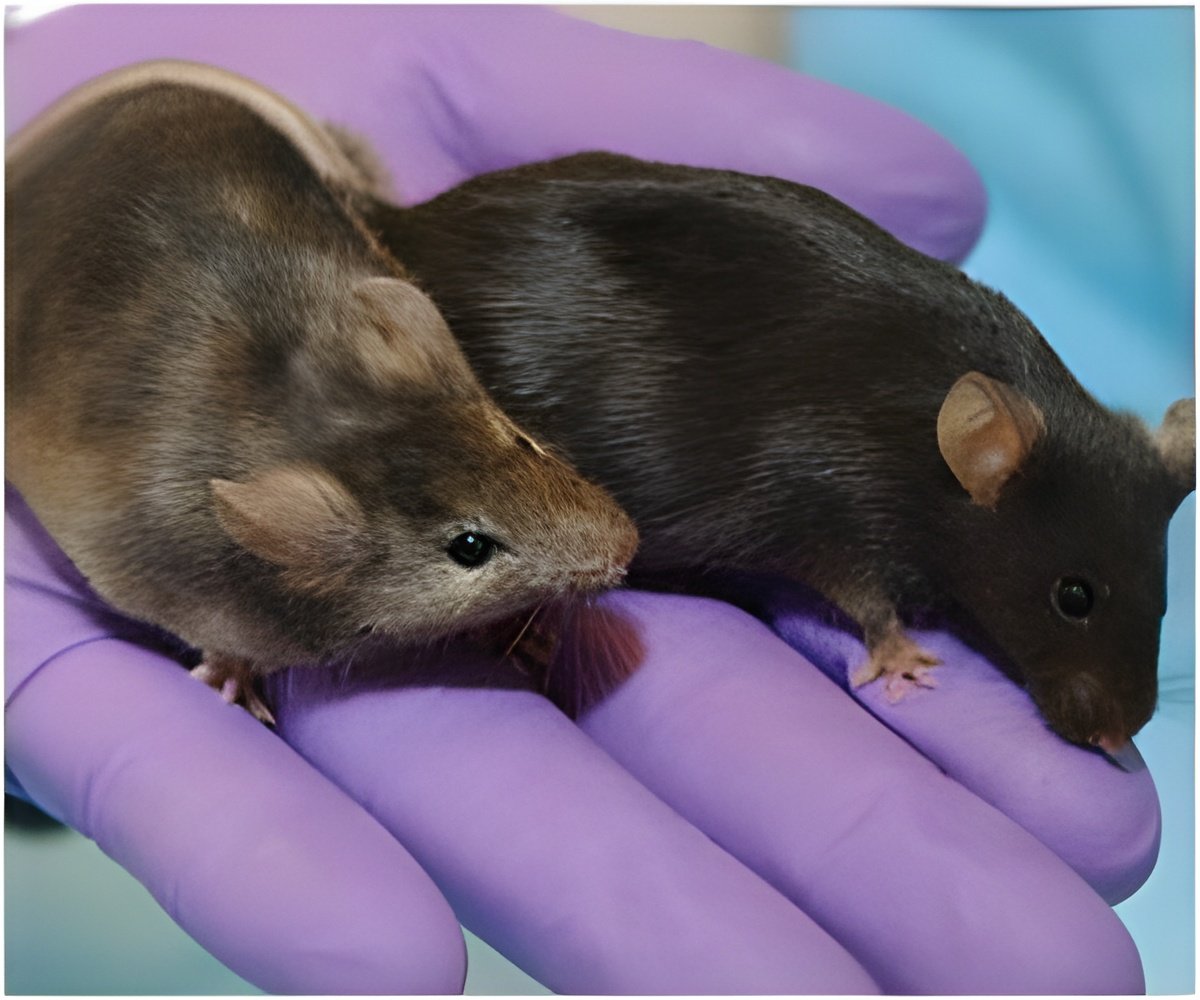

�Brainy- Mice� May Help In Developing New Treatments For Brain-Related Disorders
The super smart mice were created by altered a gene to inhibit the activity of an enzyme called phosphodiesterase-4B that may help in developing drugs.
The super smart mice were created by altered a gene to inhibit the activity of an enzyme called phosphodiesterase-4B that may help in developing drugs.
"You cannot tell that a mouse is singing or shouting. There is no obvious physical sign. And their voices during these interactions register in a range far beyond the reach of human ears," said one of the researchers Joshua Neunuebel, assistant professor of psychological and brain sciences at University of Delaware in the US.
The highest range the human ear can detect is about 20 kilohertz. The high-pitched voice of a mouse registers at about 35 to 125 kilohertz, he said.
Self-Awareness Not Exclusive to Humans, Common Among Animals
Humans are not the only animal capable of self-awareness, most animals can. Even robots can adaptively imagine themselves doing what they have not yet done.
Humans are not the only animal capable of self-awareness, most animals can. Even robots can adaptively imagine themselves doing what they have not yet done.
That is when they discovered that female mice were not just listening to male voices. They were singing back.

Ban On Multi-Vial Dose Of Diclofenac Drug for Cattle, a Boon For Survival Of Vultures
Diclofenac is a drug used for treating pain and inflammation in cattle and humans but is toxic for vultures once they scavenge on diclofenac administered cattle.
Diclofenac is a drug used for treating pain and inflammation in cattle and humans but is toxic for vultures once they scavenge on diclofenac administered cattle.
Source-IANS

First Ever 'Dolphin Brain' Scan Similar to 'Bat Brain': Emory University Neuroscientists
Evolution of dolphins and bats are far apart, but their brains have evolved similar mechanisms to use sound not just to hear but to also create mental images.
Evolution of dolphins and bats are far apart, but their brains have evolved similar mechanisms to use sound not just to hear but to also create mental images.
 Email
Email