MEDINDIA
 English
 हिन्दी
 Español
 français
 中文
中文
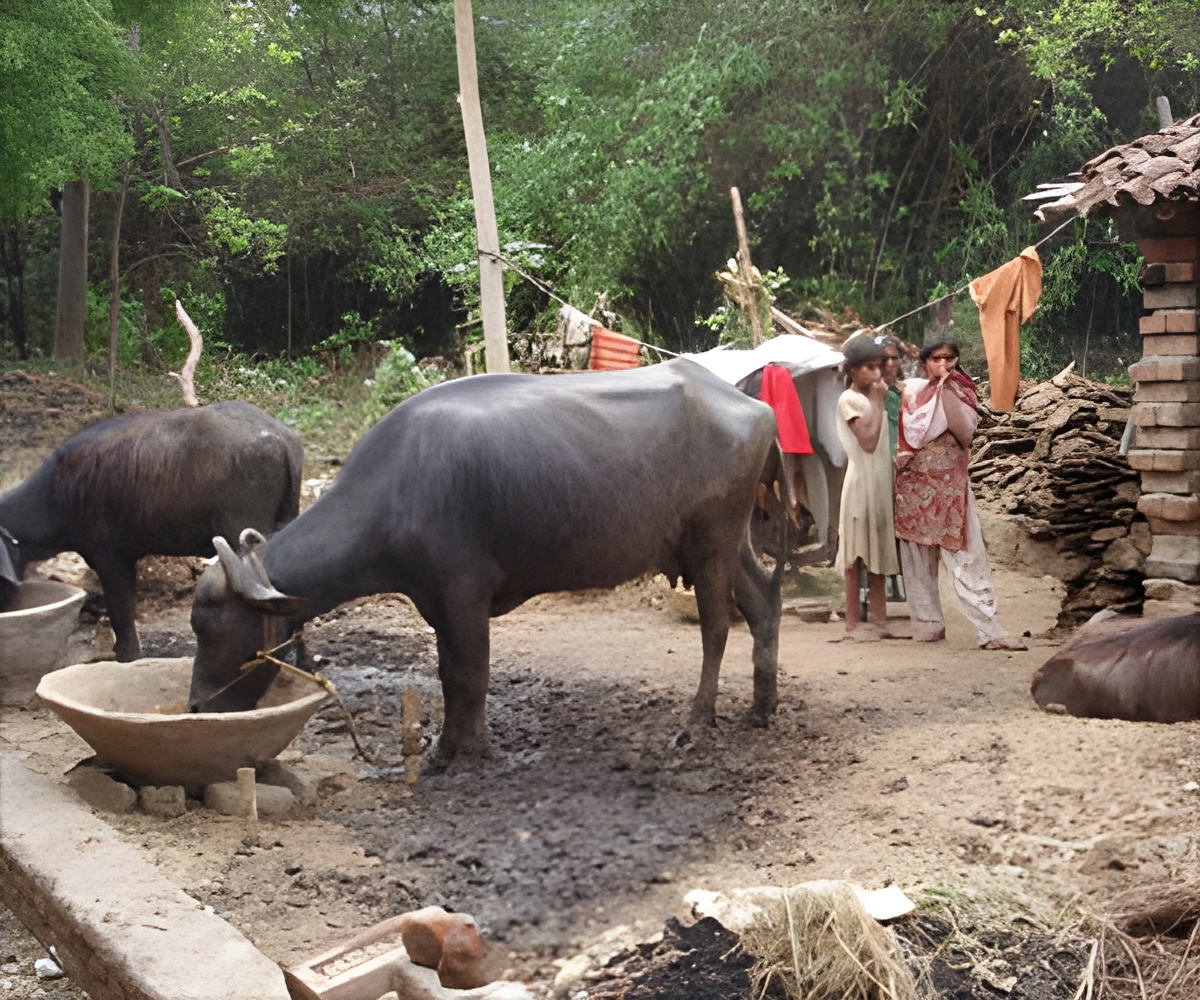
Treating cattle with the long-lasting insecticide, fipronil, could substantially reduce visceral leishmaniasis in areas where people and cattle live in proximity.
How Effective are Rapid Diagnostic Tests for the Diagnosis of Visceral Leishmaniasis?
An independent review has been conducted by researchers to test the effectiveness of rapid diagnostic tests in diagnosing patients with visceral leishmaniasis (VL)
An independent review has been conducted by researchers to test the effectiveness of rapid diagnostic tests in diagnosing patients with visceral leishmaniasis (VL)
TOP INSIGHT

Feeding cattle with low concentrations of fipronil in drug form does not harm mammals, but, can kill adult blood-feeding sand flies that feed on the cattle feces and combat visceral leishmaniasis infections.
David Poché, from Texas A&M University in College Station, USA, and colleagues set out to explore the insecticide's potential to control sand flies. The researchers developed a mathematical model that describes the effects of fipronil-induced mortality on a sand fly population within a village in Bihar. They describe the model and evaluate its performance based on known parameters. Then they use the model to simulate fipronil-based control schemes with different treatment timing and frequency, and compare their effect on reductions in sand fly populations during spring and summer (June, July, and August are the period of peak human exposure).
Single annual treatments applied in March, May, June, or July noticeably reduced the population peaks that occurred over the 30 to 60 days following treatment, but populations recovered relatively quickly. Treatments applied 3 times per year at 2-month intervals were most effective when initiated in March, reducing the population peaks in April through August by roughly 90% relative compared with no treatment. Treatments applied 6 times per year at 2-month intervals were most effective when initiated in January, reducing population peaks in June through August by over 95%. Monthly treatments resulted in eradication of the sand fly population within 2 years.
New Discovery may Cut Down Treatment Doses And Side Effects for Leishmaniasis
Amphotericin B (AmB) makes for an important ingredient in the drug used for the treatment of leishmaniasis, a disease that affects more than 12 million people
Amphotericin B (AmB) makes for an important ingredient in the drug used for the treatment of leishmaniasis, a disease that affects more than 12 million people
As the researchers discuss, "while more frequent applications obviously are more efficacious, they also are more expensive and more difficult logistically. Thus, the ability to assess not only efficacy of treatment schemes per se but also their cost-effectiveness and their logistical feasibility is of paramount importance". In this context, they mention an estimated cost of $1 per cow per treatment, as well as the fact that milk production per cow is estimated to increase by $0.50 per day, thus offering an incentive to villagers to treat their animals.
Leishmaniasis And the Mechanism Behind Its Spread
Important information about the transmission of human leishmaniasis- a group of infectious diseases that claim the lives of more than 100,000 people every year has now been revealed by a new study
Important information about the transmission of human leishmaniasis- a group of infectious diseases that claim the lives of more than 100,000 people every year has now been revealed by a new study
Suggesting that their model could be adapted to settings where donkeys, dogs, rabbits, or rodents are the main animal targets of blood-thirsty sand flies, the researchers hope that it "will prove useful in the a priori evaluation of the potential role of treatment schemes involving the use of fipronil-based drugs in the control of leishmaniasis on the Indian Subcontinent and beyond".
Sudan Scientist Asks India to Continue Supplying Drug to Treat Leishmaniasis
India has been asked by a Sudanese scientist to keep supplying the drug SSG, the only option available to treat leishmaniasis in the East African nation.
India has been asked by a Sudanese scientist to keep supplying the drug SSG, the only option available to treat leishmaniasis in the East African nation.
Source-Eurekalert
 Email
Email