MEDINDIA
 English
 हिन्दी
 Español
 français
 中文
中文
The first mouse model for auto-inflammatory diseases, disorders that involve the over-activation of the body's innate, primitive immune system, has been developed
The first mouse model for auto-inflammatory diseases, disorders that involve the over-activation of the body's innate, primitive immune system, has been developed by researchers at the University of California, San Diego School of Medicine.
Their study, published early on-line in Cell Immunity on June 4, suggests that the innate – not adaptive – immune system drives auto-inflammatory diseases. The findings could open new therapeutic directions for research into disorders such as gout or inflammatory bowel disease.
Systemic Lupus Erythematosus (SLE) - Causes, Symptoms, Diagnosis and Treatment
Systemic Lupus Erythematosus (SLE) is an autoimmune disease that affects multiple organs like the joints, skin, kidney, heart, lungs, blood vessels and brain.
Systemic Lupus Erythematosus (SLE) is an autoimmune disease that affects multiple organs like the joints, skin, kidney, heart, lungs, blood vessels and brain.
Autoimmune diseases arise from an overactive response of the body's adaptive, or acquired, immune system against substances and tissues normally present in the body. Allergies are also a product of the adaptive immune system, but in response to environmental substances. Both involve the action of lymphocytes such as B cells and T cells. The older innate immune system, on the other hand, recruits immune cells to sites of infection and inflammation, but doesn't confer long-time protection. Pathogens evoke an inappropriate response that doesn't involve antibodies or lymphocytes.
With CAPS, Hoffman had earlier discovered that mutations of the NLRP3 gene caused the auto-inflammatory disease symptoms because the gene causes alterations in the protein called cryopyrin. Cryopyrin regulates the release of interleukin-1, an important mediator of fever and systemic inflammation during the body's innate immune response, and alterations in cryopyrin lead to over-production of Il-1.
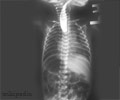
Small bowel atresia
The small bowel is the section of bowel between the stomach and the large bowel (colon). It is about 300cm long in a newborn baby at term and its function is to absorb food.
The small bowel is the section of bowel between the stomach and the large bowel (colon). It is about 300cm long in a newborn baby at term and its function is to absorb food.
"Patients treated with the Il-1β inhibitors got much better, but still exhibited some symptoms," said Hoffman.
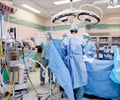
Key Hole Surgery -About
Medindia provides a very interesting Paediatric Laparoscopic surgery section for doctors
Medindia provides a very interesting Paediatric Laparoscopic surgery section for doctors
By mating these mice to mice with various gene mutant backgrounds, the scientists showed that CAPS requires an intact inflammasome, is only partially dependent on Il-1β and is independent of T cells. Their findings may help lead to more effective treatments for CAPS syndromes.

Volvulus
A volvulus is surgical condition that results in a loop of the bowel twisting on itself. This can be a life-threatening condition due to the loss of blood supply and accumulation of toxic gases and fluids in the portion of the obstructed bowel segment.
A volvulus is surgical condition that results in a loop of the bowel twisting on itself. This can be a life-threatening condition due to the loss of blood supply and accumulation of toxic gases and fluids in the portion of the obstructed bowel segment.
According to the researchers, given the importance of IL-Β and the inflammasome to innate immunity, NLRP3 knock-in mice may be applied to the study of many diseases along the autoinflammatory-autoimmune spectrum.
Source-Eurekalert
RAS
 Email
Email