MEDINDIA
 English
 हिन्दी
 Español
 français
 中文
中文
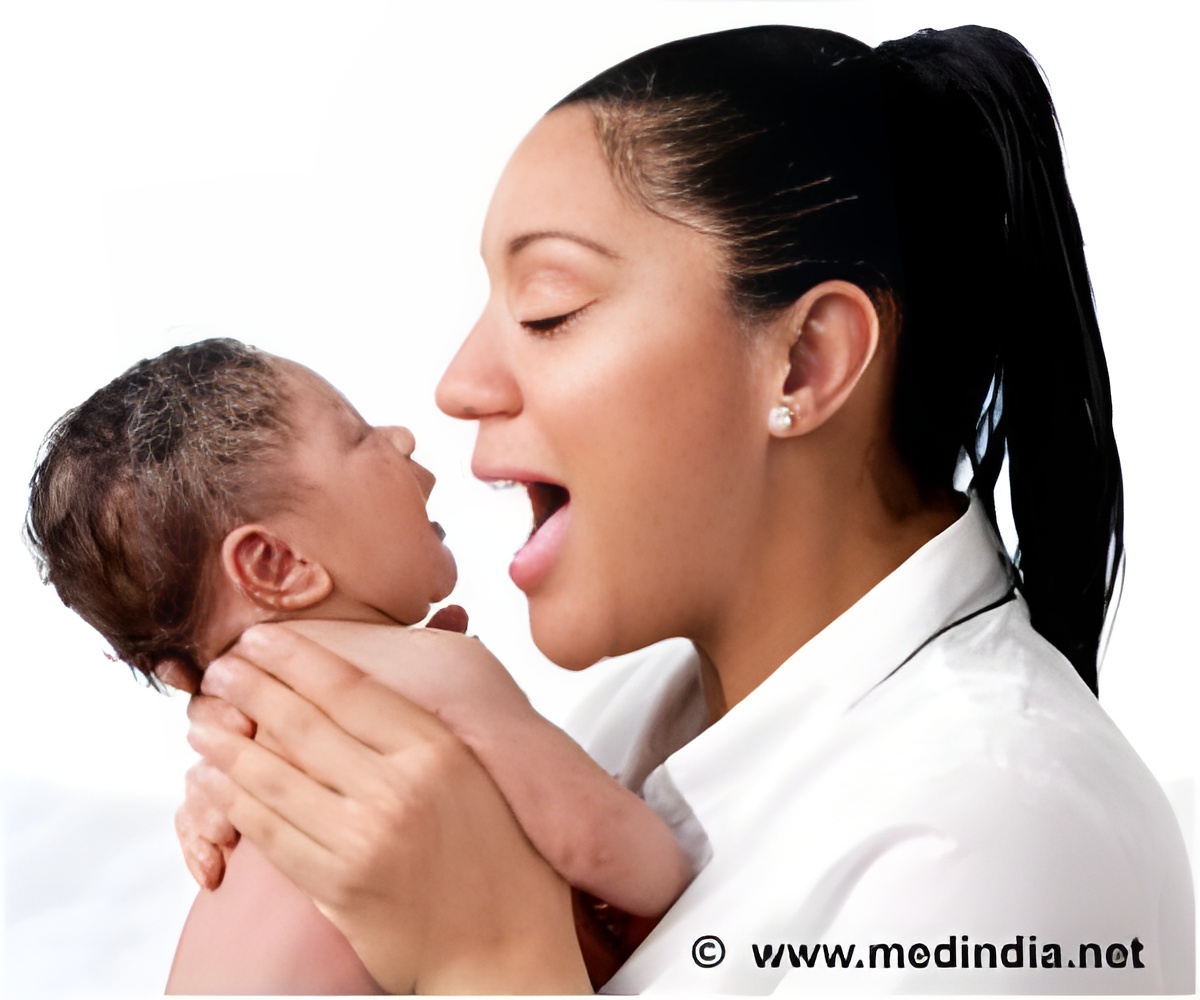
The baby expects the mother to guess and fulfil it's wishes and still the mother adapts to and supports the baby's expanding capacities and needs.

Pre-pregnancy Weight Of Mother Influences Child�s Metabolism
Parental BMI and not just the intrauterine growth influences the BMI and metabolic traits of the offspring.
Parental BMI and not just the intrauterine growth influences the BMI and metabolic traits of the offspring.
TOP INSIGHT

It’s probably not surprising that mothers excel at recognizing and interpreting the moods and emotions of their infants. Although infants can’t speak, mothers seem to know what their babies are thinking.
"Identifying factors that contribute to infants' avoidance and resistance is important for developing effective interventions that promote babies' attachment security, and in turn, positive child development," notes Ashley M. Groh, assistant professor of psychological sciences at the University of Missouri, Columbia, who led the study.
The researchers looked at an ethnically and economically diverse group of 127 mothers and their infants. Half of the families were African American and half were European American. Half of the families lived below the 2002 federal poverty line (that is, annual income below $15,000 for a family of 3) and half lived above that line.

Mother-Infant Connection Important for Child's Development
A strong emotional attachment between a mother and her baby may help prevent diseases, boost immunity, and enhance a child's IQ.
A strong emotional attachment between a mother and her baby may help prevent diseases, boost immunity, and enhance a child's IQ.
Six months later, when the babies were 12 months old, researchers assessed infants' attachments to their mothers using the Strange Situation procedure, in which infants go through a series of separations and subsequent reunions with their mothers; an infant's behavior when reunited with his or her mother tells us about the pattern of attachment. Upon being reunited with their mothers, insecure-avoidant infants ignore their mothers, while insecure-resistant infants become very distressed and simultaneously seek and resist their mothers.

Homeopathy Helps Mothers With Nursing, Breastfeeding Difficulties
When it comes to medications, we tend to choose the way which has the least possibily of side effects and avoid the one which is perilous in the long run.
When it comes to medications, we tend to choose the way which has the least possibily of side effects and avoid the one which is perilous in the long run.
"This study provides evidence that we can better understand babies' and mothers' experiences in these important encounters when babies need reassurance and support if we consider both the mothers' emotional response and her physiological regulation in these challenging caregiving contexts," explains Martha Cox, professor of psychology at the University of North Carolina, Chapel Hill. "The evidence can inform efforts aimed at promoting attachment security. Such efforts might target the specific challenges mothers face when confronted with their babies' distress."
Lessons on Breast Feeding is a Necessity for Mothers-To-Be
The first feeding after the birth is very important as it contains pre-milk, colostrums, which protects the baby from various illness.
The first feeding after the birth is very important as it contains pre-milk, colostrums, which protects the baby from various illness.
 Email
Email