
Risk Factors for Alzheimers Disease
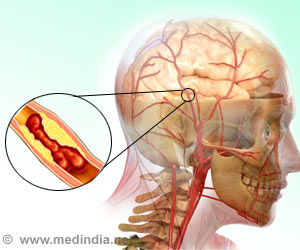
Cognitively normal adults exhibiting atrophy of their temporal lobe or damage to blood vessels in the brain are more likely to develop Alzheimer’s disease.
Cognitively normal adults exhibiting atrophy of their temporal lobe or damage to blood vessels in the brain are more likely to develop Alzheimer’s disease.
‘Understanding the proteasome system, provides a way to repair the system when it breaks, and alleviates symptoms of neurodegenerative disorders.’
Tweet it Now
To remain healthy, brain cells must continually clear out old, worn, or damaged proteins, a task performed by a small molecular cylinder called the proteasome. The proteasome acts as a kind of garbage disposal, grinding up the old proteins so they can be recycled into new ones. In neurodegenerative diseases, proteins tagged for destruction accumulate in the brain's neurons, suggesting that the cell's proteasomes are impaired. Using a mouse model of neurodegeneration, the researchers first discovered that tau--a toxic protein that accumulates in Alzheimer's and other brain degenerative diseases--sticks to the proteasome and slows down the protein disposal process.
Administering rolipram activated the proteasome and restored protein disposal to normal levels. The drug also improved the memory of diseased mice to levels seen in healthy mice. Rolipram has been tested before in mice and was shown to improve memory, but the mechanism for how this occurred was unclear. The new research shows that by inhibiting of the PDE-4 enzyme, rolipram produces a physical change in the proteasome that increases its activity.

Inability to Recognize Familiar Smells Could Signal Alzheimers
People who have difficulty recognizing familiar smells could be experiencing an early sign of Alzheimer's disease, according to a study published Monday.
People who have difficulty recognizing familiar smells could be experiencing an early sign of Alzheimer's disease, according to a study published Monday.
Drugs that target proteasomes in this way should work for any disease caused by the accumulation of abnormal proteins, including Alzheimer's, Huntington's, Parkinson's and frontotemperoral dementia.
Advertisement

Lack of Vitamin D Linked to Higher Risk of Dementia
Older people who do not get enough vitamin D face a much higher risk of Alzheimer's disease or dementia, the largest study of its kind on the topic said.
Older people who do not get enough vitamin D face a much higher risk of Alzheimer's disease or dementia, the largest study of its kind on the topic said.
"This exciting research from Dr. Duff's team advances our basic understanding of the proteasome system, provides a way to repair the system when it breaks, and alleviates symptoms of neurodegenerative disorders," said Rod Corriveau, PhD, program director at the National Institute of Health's National Institute of Neurological Disorders and Stroke, which provided funding for the study.
Advertisement

Young Blood to Cure Decline of Aging Brain
A research showed that injections of juvenile mouse blood boosts learning and memory in older rodents, findings that hold the long-sought cure for the decline of ageing brain.
A research showed that injections of juvenile mouse blood boosts learning and memory in older rodents, findings that hold the long-sought cure for the decline of ageing brain.