MEDINDIA
 English
 हिन्दी
 Español
 français
 中文
中文
An improved algorithm that can dramatically improve how radiologists capture and interpret full-body MRIs, particularly in the abdominal region, says a new study.
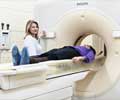
Computed Tomography Scan (CT Scan)
Computed Tomography (CT) scan is a type of medical examination that uses X-rays and computer processing to create sectional images of the body to provide more efficient results than X-rays.
Computed Tomography (CT) scan is a type of medical examination that uses X-rays and computer processing to create sectional images of the body to provide more efficient results than X-rays.
In the study performed at the University Hospital at Case Medical Center, Case Western Reserve University, Dr. Bookwalter and her colleagues successfully showed how the MARs technique allows radiologists and technicians to create clinically useful images, even in the presence of motion. She is confident that this algorithm will be useful tool for image interpretation. She says, "The MARs algorithm requires very little alteration of the clinical MR protocol. We envision the final application of this technique to be completely automatic and likely applied by the clinical technologist prior to presentation to the radiologist."
Dr. Bookwalter will deliver a presentation on this study on Thursday, May 5, 2011 at the 2011 ARRS Annual Meeting at the Hyatt Regency Chicago.
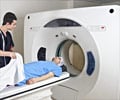
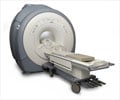
About Magnetic Resonance Imaging(MRI)
Encyclopedia section of medindia gives general info about Magnetic Resonance Imaging
Encyclopedia section of medindia gives general info about Magnetic Resonance Imaging
Source-Eurekalert

Introduction of Nuclear Medicine
Encyclopedia section of medindia gives general info about Nuclear Medicine
Encyclopedia section of medindia gives general info about Nuclear Medicine
 Email
Email