MEDINDIA
 English
 हिन्दी
 Español
 français
 中文
中文
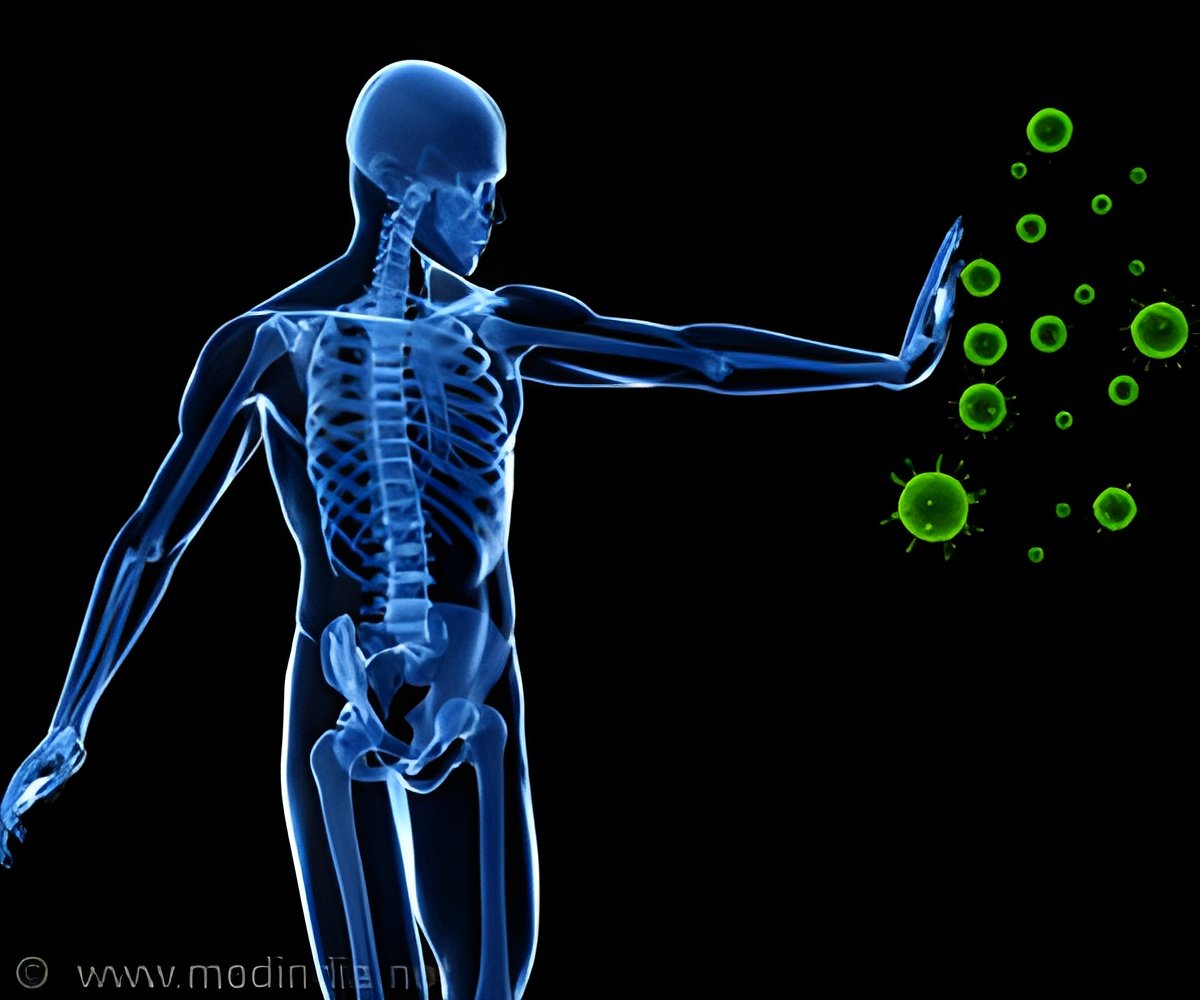
Our immune system does a remarkable job of defending us against disease-causing microorganisms, but sometimes it fails.

To Attack Cancer, Scientists Light the Way for Immune System
Immunotherapy for cancer is a hot area of research, as scientists try to improve the success rate of this treatment.
Immunotherapy for cancer is a hot area of research, as scientists try to improve the success rate of this treatment.
TOP INSIGHT

Our immune system does a remarkable job of defending us against disease-causing microorganisms. But sometimes it fails, a germ invades successfully and makes us sick.
Most of the current treatments against auto-immune diseases require to shut down major parts of the immune system, inhibiting desirable immune responses and, leaving the patient vulnerable to potentially life-threatening bacterial and viral infections. Such a drastic solution is required because until now scientists had yet not fully identified a different mechanism in these rogue cells they could use as a selective target - the known genetical material was common between healthy and rogue cells. But in their publication in Nature Communications, researchers in Okinawa, Japan reported a previously undiscovered role for a known molecule - named "JunB" - and its associated gene: JunB seems to be essential for a specific type of white blood cell to turn toxic.
The scientists were investigating T Helper white blood cells, which coordinate the immune system response by secreting a diverse range of communication signals in the shape of molecules called interleukins. JunB operates in 'T Helper 17' cells, a subdivision that specifically promotes the initial immune response against an infection. But sometimes, these T Helper 17 cells turns rogue and become toxic for our guts and joints.

New Insights on How Cancers Evade the Immune System
Promoters are regions in the genome that regulate the expression of genes, similar to the switch of a light bulb.
Promoters are regions in the genome that regulate the expression of genes, similar to the switch of a light bulb.
The OIST scientists studied the process in which T-Helper 17 cells become toxic. One of the immune system communication molecules - interleukin 23 - is required to "wake up" T-Helper 17 cells during an infection and make it start fighting the invaders. But interleukin 23 is a double-edged sword: it also responsible for sometimes triggering the same T Helper 17 cell to turn rogue. For T helper 17 cells to hear the wake-up call, they need to display interleukin 23 receptors on their surface, which means the corresponding gene - usually switched off - needs to be activated. Finding a way to stop this interleukin 23 receptor gene from being activated is potentially key to shut down the entire process. And this is where JunB, the focus of this research, comes into play.

Illicit Drugs, Heroin, Trigger Response from Immune System
Injection drug use (IDU), with or without HIV-infection, is associated with an increase in immune activation, measured in blood and in the GI tract.
Injection drug use (IDU), with or without HIV-infection, is associated with an increase in immune activation, measured in blood and in the GI tract.
"It was quite a challenge: we knocked down around three hundred transcription factors, one by one," said Prof. Ishikawa. "Developing a mice model with a knocked out JunB took us two years!"

Novel Oncolytic Virus That Redirects Patient's Immune System to Attack Cancer Cells
There are several limitations in using oncolytic adenoviruses; one of them is our own immune system, which recognizes it as a pathogen and therefore attacks it.
There are several limitations in using oncolytic adenoviruses; one of them is our own immune system, which recognizes it as a pathogen and therefore attacks it.
In this direction, OIST researchers went onto investigate the exact role of JunB, and this is where it gets a little complex. As a transcription factor, JunB activates another gene - RORγ-t - by helping three other transcription factors bind to the DNA sequence in the chromosome. The product of this gene RORγ-t is a fifth transcription factor which activates the gene Interleukin-23 receptor. Only then the T Helper 17 cell displays interleukin 23 receptors and might turn rogue.
The scientists hope to deepen their knowledge of JunB considering a future treatment against T Helper-17 related auto-immune diseases. "Previously, several transcription factors such as RORγ-t have been found essential for all T Helper 17 cells." added Prof. Ishikawa. "If we use these molecules as targets for therapy, all T Helper 17 cells will be affected, toxic or not. However, JunB seems to be critical only for toxic T Helper 17 cells: this would allow us to develop a pinpointing, more selective therapy."
Source-Eurekalert
 Email
Email