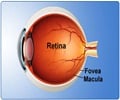
One family of molecules in particular -- thrombospondins -- may have therapeutic potential for the treatment of degenerative eye diseases.

Evena Medical Launches Eyes-On Glasses for Deep Tissue Vascular Imaging
Evena Medical’s Eyes-On Glasses offers clinicians the first point-of-care wearable ultrasound system for deep tissue vascular imaging.
Evena Medical’s Eyes-On Glasses offers clinicians the first point-of-care wearable ultrasound system for deep tissue vascular imaging.
‘One family of molecules - thrombospondins - from human umbilical cord tissue, may have therapeutic potential for the treatment of degenerative eye diseases.’





"By learning more about how these cells work, we are one step closer to understanding the disease states in which these cells should be studied," said lead researcher Cagla Eroglu from Duke University Medical Centre. Umbilical cord tissue-derived cells (hUTC) differ from umbilical cord blood cells in that they are isolated from cord tissue itself, rather than the blood.
The Duke team used an established cell culture system to determine whether and how the hUTCs might affect the growth of neurons isolated from the retinas of rat eyes.

Programmable Electronic Glasses Improve Vision in Kids Just as Well as Eye Patches
With these electronic occlusion glasses, the child learns that the lens will be clear again in just a few seconds so they may be more cooperative with treatment.
With these electronic occlusion glasses, the child learns that the lens will be clear again in just a few seconds so they may be more cooperative with treatment.
These cells also survived longer than rat neurons placed in a bath lacking the umbilical cord tissue-derived cells.
Advertisement

Falling and Fighting Top List of Causes for Eye Injuries in United States
Falls and brawls top the list of major causes of ocular trauma injuries resulting in hospitalization. The cost to treat eye injuries exceeds $20,000 per injury.
Falls and brawls top the list of major causes of ocular trauma injuries resulting in hospitalization. The cost to treat eye injuries exceeds $20,000 per injury.
The study was published in the Journal of Neuroscience.
Advertisement
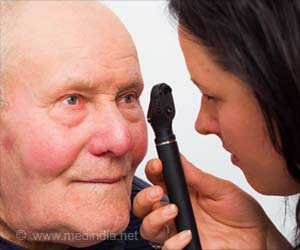
Eye Injection More Effective To Reverse Diabetic Blindness
An injection in the eye of the drug ranibizumab resulted in visual acuity that was not worse than panretinal photocoagulation at 2 years.
An injection in the eye of the drug ranibizumab resulted in visual acuity that was not worse than panretinal photocoagulation at 2 years.