MEDINDIA
 English
 हिन्दी
 Español
 français
 中文
中文
A genotype-first approach to patient care involves selecting patients with specific genomic variants and then studying their traits and symptoms.


Achondroplasia - Causes, Symptoms, Diagnosis, Treatment
Achondroplasia is a rare genetic disorder of bone growth that causes short-limbed dwarfism. It occurs due to mutations in a single gene called the FGFR3.
Achondroplasia is a rare genetic disorder of bone growth that causes short-limbed dwarfism. It occurs due to mutations in a single gene called the FGFR3.
TOP INSIGHT

The study shows genotype-first approach uncovers new links to genetic conditions.
Discoveries from a Genotype-first Approach
“Genomics has the potential to change reactive medicine into preventative medicine,” said Leslie Biesecker, M.D., NIH distinguished investigator, director of NHGRI’s Center for Precision Health Research and a senior author of the article. “Studying how taking a genotype-first approach to research can help us learn how to model predictive and precision medicine in the future.”First, the researchers found that this approach helped discover new relationships between genomic variants and specific clinical traits. For example, one NIH study found that having more than two copies of the TPSAB1 gene was associated with symptoms related to the gastrointestinal tract, connective tissues, and the nervous system.
Second, this approach helped researchers find novel symptoms related to a disorder that clinicians previously missed because the patient did not have the typical symptoms. NHGRI researchers identified a person with a genomic variant associated with a known metabolic disorder. Further testing found that the individual had high levels of certain chemicals in their body associated with the disorder, despite having only minor symptoms.
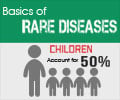
Basics of Rare Diseases - Types, Diagnosis and Treatment
Rare or orphan diseases are least understood of all chronic diseases. They are more common than projected and kill more people than cancer and HIV together.
Rare or orphan diseases are least understood of all chronic diseases. They are more common than projected and kill more people than cancer and HIV together.
The 13 studies that implemented a genotype-first approach used genomic data from NHGRI’s Reverse Phenotyping Core in the Center for Precision Health Research. The core aggregates genomic data from programs such as ClinSeq(R) and the National Institute of Allergy and Infectious Disease (NIAID) Centralized Sequencing Protocol, which together allowed analyses to be performed on more than 16,000 research participants who have undergone genome or exome sequencing.

Aicardi-Goutieres Syndrome - Causes, Symptoms, Diagnosis, Treatment
Aicardi-Goutieres Syndrome is observed in infants and older children. To date, defects in 6 genes are known to cause the syndrome. Irritability, erratic sleep, and fever are some symptoms.
Aicardi-Goutieres Syndrome is observed in infants and older children. To date, defects in 6 genes are known to cause the syndrome. Irritability, erratic sleep, and fever are some symptoms.
“Importantly, we provide a framework for other institutions to build research programs that allow for genotype-first studies. With more programs taking this approach, we can better study the predictive potential of genomic medicine,” said Clesson Turner, M.D., director of NHGRI’s Reverse Phenotyping Core and a senior author of the article.

Test Your Knowledge on Genetics
Genetics is the branch of science that deals with the study of genes, heredity and variation among all living things. Major strides have been made in the field of genetics and it finds numerous applications in modern medicine.
Genetics is the branch of science that deals with the study of genes, heredity and variation among all living things. Major strides have been made in the field of genetics and it finds numerous applications in modern medicine.
“In the future, as more researchers adopt this approach, we hope to identify more people who may be helped by the availability of their genome sequence, especially as more diverse populations join genome-sequencing studies,” says Dr. Wilczewski.
Source-Eurekalert
 Email
Email