MEDINDIA
 English
 हिन्दी
 Español
 français
 中文
中文
New study finds that gut bacteria may help control movement in fruit flies. Germ-free flies were hyperactive speed walkers, but treatment with a bacterium slowed them down.
Amazing Benefits of Gut Bacteria
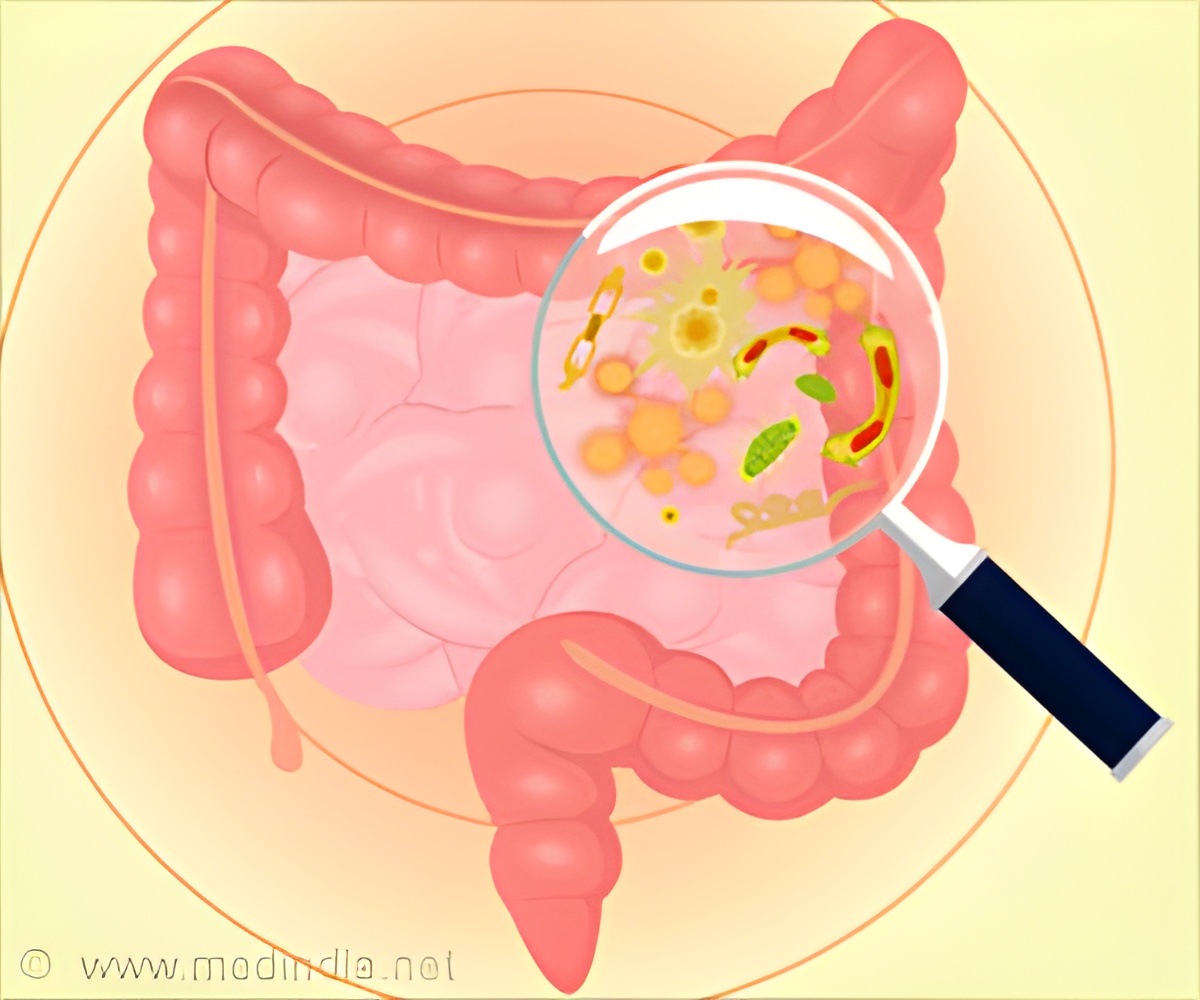
The bacteria that live in the gut offer numerous health benefits such as synthesis of vitamin K, boosting immunity and metabolism of bile acids.
The bacteria that live in the gut offer numerous health benefits such as synthesis of vitamin K, boosting immunity and metabolism of bile acids.
TOP INSIGHT

A new study finds that gut bacteria may help control movements in flies. Treatment with a gut bacterium slowed down the germ-free flies which were hyperactive speed walkers. Hence gut bacteria play a significant role in the mammalian movement.
Researchers led by Sarkis K. Mazmanian, Ph.D., professor of microbiology at the California Institute of Technology in Pasadena, and graduate student Catherine E. Schretter, observed that germ-free flies, which did not carry bacteria, were hyperactive. For instance, they walked faster, over greater distances, and took shorter rests than flies that had normal levels of microbes. Dr. Mazmanian and his team investigated ways in which gut bacteria may affect behavior in fruit flies.
"Locomotion is important for a number of activities such as mating and searching for food. It turns out that gut bacteria may be critical for fundamental behaviors in animals," said Dr. Mazmanian.

Gut Bacteria Diversity Affected by Polycystic Ovarian Syndrome
Elevated testosterone levels in women linked to less diverse microbiome composition in the gut.
Elevated testosterone levels in women linked to less diverse microbiome composition in the gut.
Dr. Mazmanian's group also discovered that the molecule xylose isomerase (Xi), a protein that breaks down sugar and is found in L. brevis, may be critical to this process. Isolating the molecule and treating germ-free flies with it was sufficient to slow down the speed walkers.

Gut Bacteria Might Stimulate Fat Breakdown, Prevent Obesity
Deactivating a byproduct of bacterial digestion of amino acids has shown to prevent obesity despite a high-fat diet.
Deactivating a byproduct of bacterial digestion of amino acids has shown to prevent obesity despite a high-fat diet.
Next, the researchers looked into the flies' nervous system to see what cells were involved in the bacteria-directed movement. When Dr. Mazmanian's team turned on neurons that produce the chemical octopamine, that activation canceled out the effect of L. brevis on the germ-free flies. As a result, the flies, which had previously slowed down after receiving the bacterium or Xi, resumed their speedwalking behavior. Turning on octopamine-producing nerve cells in flies with normal levels of bacteria also caused them to move faster. However, activating neurons that produce other brain chemicals did not influence the flies' movements.

Could Immune Responses to Gut Bacteria be Linked With Rheumatoid Arthritis?
The immune cell responses in the intestinal bacteria are linked to rheumatoid arthritis, finds a new study.
The immune cell responses in the intestinal bacteria are linked to rheumatoid arthritis, finds a new study.
Instead of octopamine, mammals produce a comparable chemical called noradrenaline, which has been shown to control movement. "Gut bacteria may play a similar role in mammalian locomotion, and even in movement disorders such as Parkinson's disease," said Dr. Mazmanian.
More research is needed to see whether bacteria control movement in other species, including mammals. Also, future studies will further investigate how Xi is involved in these behaviors.
Source-Eurekalert
 Email
Email