MEDINDIA
 English
 हिन्दी
 Español
 français
 中文
中文
Cognitive development in children can be improved when they are exposed to greenness in their residential areas. Exposure to greenness can better their performance.


Stress Affects Brain Development in Children: Study
In children, stress alters growth of a specific piece of the brain and abilities associated with it, suggests study.
In children, stress alters growth of a specific piece of the brain and abilities associated with it, suggests study.
TOP INSIGHT

Living in green spaces can promote social connections and physical activity and can also reduce exposure to air and noise pollution.
The analysis, published in Environment Health Perspectives, was based on data from 1,500 children of the INMA Environment and Childhood Project cohort in Sabadell and Valencia, collected during 2003-2013.
The ISGlobal team analysed residential surrounding greenness at 100, 300 and 500 metres distance at birth, 4-5 years and 7 years of age. Two types of attention tests were performed at 4-5 and 7 years of age.
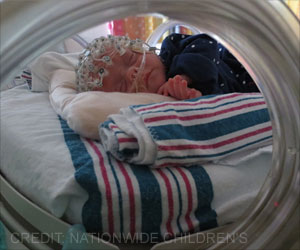
Brain Development in Newborns Improves With Gentle Touch
Gentle touch therapy during hospitalization of newborns especially among pre-term babies aid brain development in the future.
Gentle touch therapy during hospitalization of newborns especially among pre-term babies aid brain development in the future.
Payam Dadvand, ISGlobal researcher and first author of the study, emphasizes "this is the first time that the impact of lifelong residential exposure to green spaces on attention capacity in children has been studied."
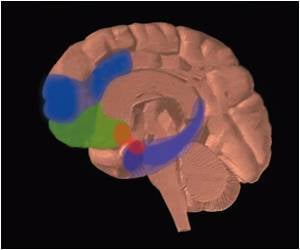
Wealth Disparity and Family Income Impact the Brain Development of Female Teenagers
The risk of youth developing a mental illness and contributes to a growing body of evidence that living in poverty disturbs brain development.
The risk of youth developing a mental illness and contributes to a growing body of evidence that living in poverty disturbs brain development.
Jordi Sunyer, study coordinator and head of the Child Health Programme at ISGlobal, points out that "the possibility that exposure to different types of vegetation might have different impacts on neurodevelopment remains an open question". Therefore, Sunyer considers further studies should be done in other settings with different climates and vegetation.

Offspring's Brain Development Could Be Affected By Stressed Dads
Stress felt by dad leaves a lasting impression on his sperm that gives sons and daughters a blunted reaction to stress finds study.
Stress felt by dad leaves a lasting impression on his sperm that gives sons and daughters a blunted reaction to stress finds study.
Source-Eurekalert
 Email
Email