MEDINDIA
 English
 हिन्दी
 Español
 français
 中文
中文
Since the risk of tuberculosis (TB) and latent TB, where the disease is dormant but can be reactivated, is high in prisons, its spread can affect the general population too.

Tuberculosis - Spread - Symptoms - Diagnosis - Treatment - FAQs
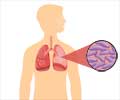
Tuberculosis, caused by Mycobacterium tuberculosis, primarily affects the lung. It may spread to other organs.
Tuberculosis, caused by Mycobacterium tuberculosis, primarily affects the lung. It may spread to other organs.
The authors say: "These data may prove useful to inform the development of rational policies to control TB transmission in correctional facilities." They add: "Future studies should assess the population attributable risk of prison-to-community spread and describe the conditions in the prison that influence TB transmission."
In an accompanying editorial, the PLoS Medicine editors conclude: "The publication of this systematic review marks a shift from considering the incidence of TB in each prison population to considering the massive global impact of tuberculosis in prisons."

World Tuberculosis Day 2010 - "On the Move Against Tuberculosis, Innovate to Accelerate Action"
World Tuberculosis Day on March 24th is tailored increase public awareness about TB which is still an epidemic in many regions of the world. This year’s theme is Innovate to Accelerate Action.
World Tuberculosis Day on March 24th is tailored increase public awareness about TB which is still an epidemic in many regions of the world. This year’s theme is Innovate to Accelerate Action.
Source-Eurekalert

Vitamin D may Be Helpful to Curb Tuberculosis
A study of 131 people found the vitamin helped to boost the ability of the body to
A study of 131 people found the vitamin helped to boost the ability of the body to
Tuberculosis � 125 Years Since Discovery, Yet a Challenge to Date
The World Health Organization estimates that nearly nine million people around the world suffer Tuberculosis, which kills one-point-six million people each year.
The World Health Organization estimates that nearly nine million people around the world suffer Tuberculosis, which kills one-point-six million people each year.
 Email
Email