MEDINDIA
 English
 हिन्दी
 Español
 français
 中文
中文
Combined effects of brain stimulation and visual training may help re-orchestrate neurotransmission for stroke survivors with vision defects.
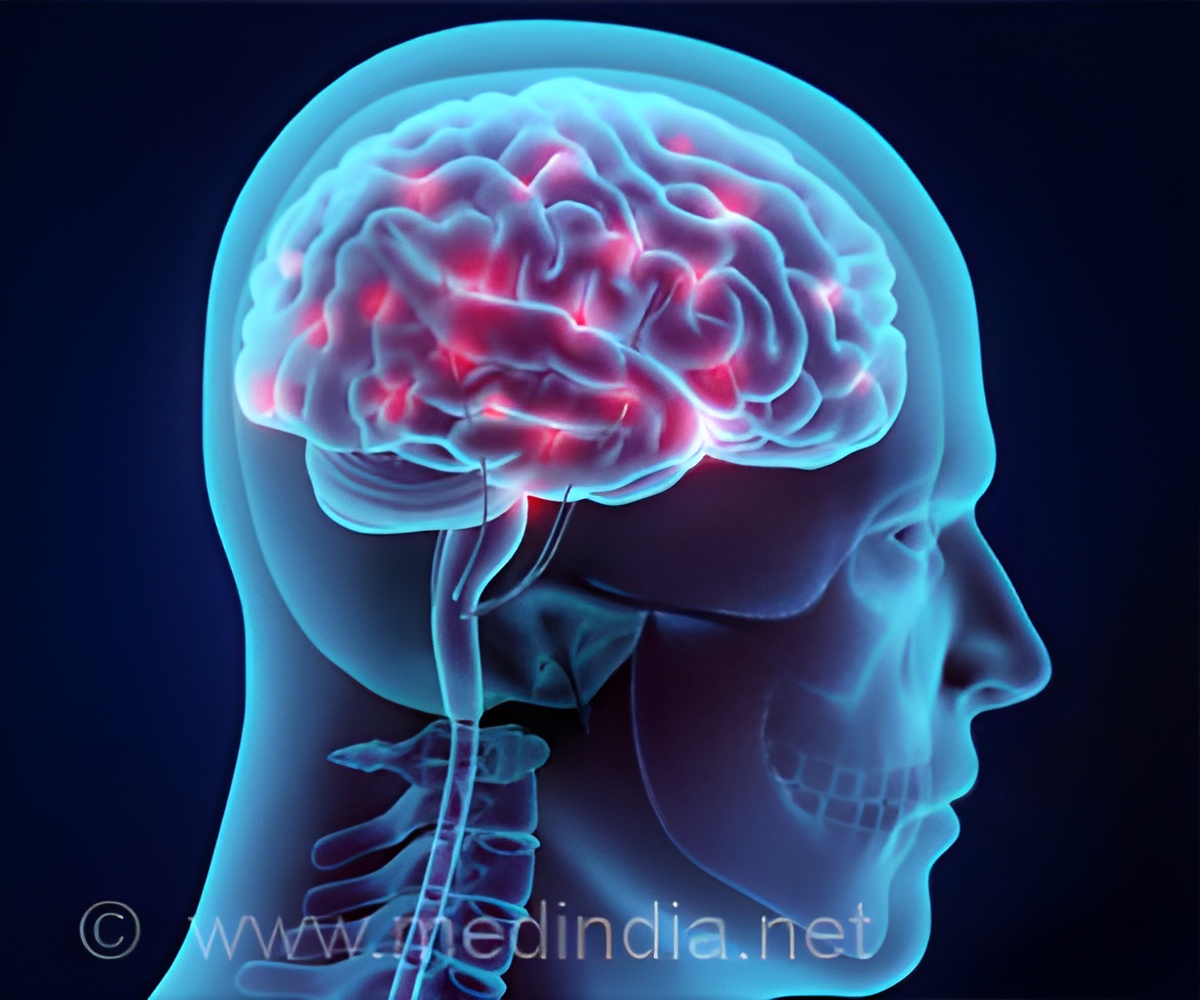
Boosting hemianopia recovery: the power of interareal cross-frequency brain stimulation
Go to source)
Over thousands of stroke patients face vision problem known as hemianopia, which seriously impacts routine life (reading, walking, and driving). At present, no specific treatment exists to reinstate lost vision following stroke.
The non-invasive brain synchronizing approach could serve as a more accessible vision therapy for stroke people who suffer from hemianopia.

Quiz on Stroke
Stroke is the third leading cause of death world over. Besides, it also disables the affected people, making them completely dependent on caregivers for their daily needs. Lifestyle greatly affects the chances of developing a stroke. Thus, the ...
Stroke is the third leading cause of death world over. Besides, it also disables the affected people, making them completely dependent on caregivers for their daily needs. Lifestyle greatly affects the chances of developing a stroke. Thus, the ...
TOP INSIGHT

Did You Know?
The transcranial #brain-stimulation approach alters brain communication following a #stroke, leading to vision enhancement in stroke patients with #hemianopia. #stroke_recovery #neurology #visual_training #hemianopia
The Impact of Stroke on Motion Detection
The challenge lies in how the brain coordinates activity across visual regions, like between the primary visual cortex and the medio-temporal area (secondary visual cortex), an interaction that is responsible for detecting motion.These regions normally operate in an orchestrated fashion, exchanging information through precise timing of electrical brain rhythms known as oscillations. But a stroke can often cause this communication to break down.
Studies have suggested that targeting these oscillations with external non-invasive brain stimulation might help restore the disturbed, out-of-sync communication between regions, enhance performance and support visual recovery.
In this vein, researchers led by Friedhelm Hummel at EPFL's Neuro-X Institute have tested a new treatment that combines visual training with a multifocal, non-invasive brain stimulation approach to re-orchestrate brain communication and improve recovery in hemianopia.
Stroke Risk Calculator
Stroke Risk Calculator checks if you have hypertension, diabetes and heart failure and predicts the risk of stroke (cerebrovascular accident) in next 10 years.
Stroke Risk Calculator checks if you have hypertension, diabetes and heart failure and predicts the risk of stroke (cerebrovascular accident) in next 10 years.
Innovative Treatment Inspired by Brain Physiology
In this proof-of-concept placebo-controlled, double-blind clinical trial, first author Estelle Raffin and her colleagues showed that this new approach can significantly enhance recovery of visual functions in stroke patients, even those with long-standing visual impairments.“This is one of our exciting clinical projects where we applied an innovative novel treatment strategy based on orchestrated bifocal non-invasive brain stimulation to the visual system inspired by the physiological functioning of the brain to enhance visual functions in stroke patients with hemianopia,” says Hummel.
“Furthermore, we determined factors that were associated with response to the treatment, potential biomarkers for patient stratification.”
The trial enrolled 16 stroke patients with hemianopia. The participants trained on a motion-detection task designed to stimulate the edge of their blind field.

See Beyond: SideSight Device for Homonymous Hemianopia
Discover the latest advancements in Homonymous Hemianopia treatment with Ocutech's SideSight, to enhance mobility and safety for individuals with vision loss.
Discover the latest advancements in Homonymous Hemianopia treatment with Ocutech's SideSight, to enhance mobility and safety for individuals with vision loss.
Targeting Alpha and Gamma Waves in the Visual Cortex
At the same time, they received a type of brain stimulation called cross-frequency transcranial alternating current stimulation (cf-tACS), which uses low-intensity electrical currents to modulate brain oscillations, re-orchestrate them and enhance cognitive functions.In this study, cf-tACS was used to synchronize brain oscillations between the primary visual cortex and the medio-temporal area.
The researchers applied electrical signals at different frequencies to these two areas in a way that mimicked the brain's natural communication pattern.
Specifically, they used what is known as a forward-pattern cf-tACS, which delivers low-frequency alpha waves to the primary visual cortex and high-frequency gamma waves to the motion-sensitive area.
This approach mirrors the brain’s typical “bottom-up” information flow during visual processing, helping to re-establish disrupted communication after stroke.
The patients who received the forward-pattern cf-tACS showed significantly greater improvements in motion perception than those who received the reverse-pattern control. Patients experienced measurable expansions in their visual fields, particularly in the areas that were targeted during training.
Brain Scans Confirm Restored Communication
Some patients even reported real-world improvements, such as one being “able to see the right arm of his wife when seated on the passenger seat, when she is driving”, which was impossible before the cf-tACS treatment.Brain imaging and EEG data confirmed that the treatment restored communication between the primary visual cortex and the medio-temporal area.
EEG revealed improved synchronization between these regions, and brain scans confirmed increased activity in the medio-temporal area after stimulation.
The strongest improvements were seen in patients whose visual cortex-to-medio-temporal area pathways were still partly intact, suggesting that even partial preservation of these circuits can support recovery.
This study shows that targeting specific brain circuits with synchronized, physiology-inspired stimulation can amplify the effects of visual training. If confirmed in larger trials, the approach could offer a faster, more accessible therapy for stroke survivors who suffer hemianopia.
Reference:
- Boosting hemianopia recovery: the power of interareal cross-frequency brain stimulation. - (https://academic.oup.com/brain/advance-article/doi/10.1093/brain/awaf252/8322719)
Source-Eurekalert
 Email
Email