MEDINDIA
 English
 हिन्दी
 Español
 français
 中文
中文
Inflammation may probably be a vital part in the evolution from reflux to esophageal cancer, states a new study in Clinical Gastroenterology and Hepatology.
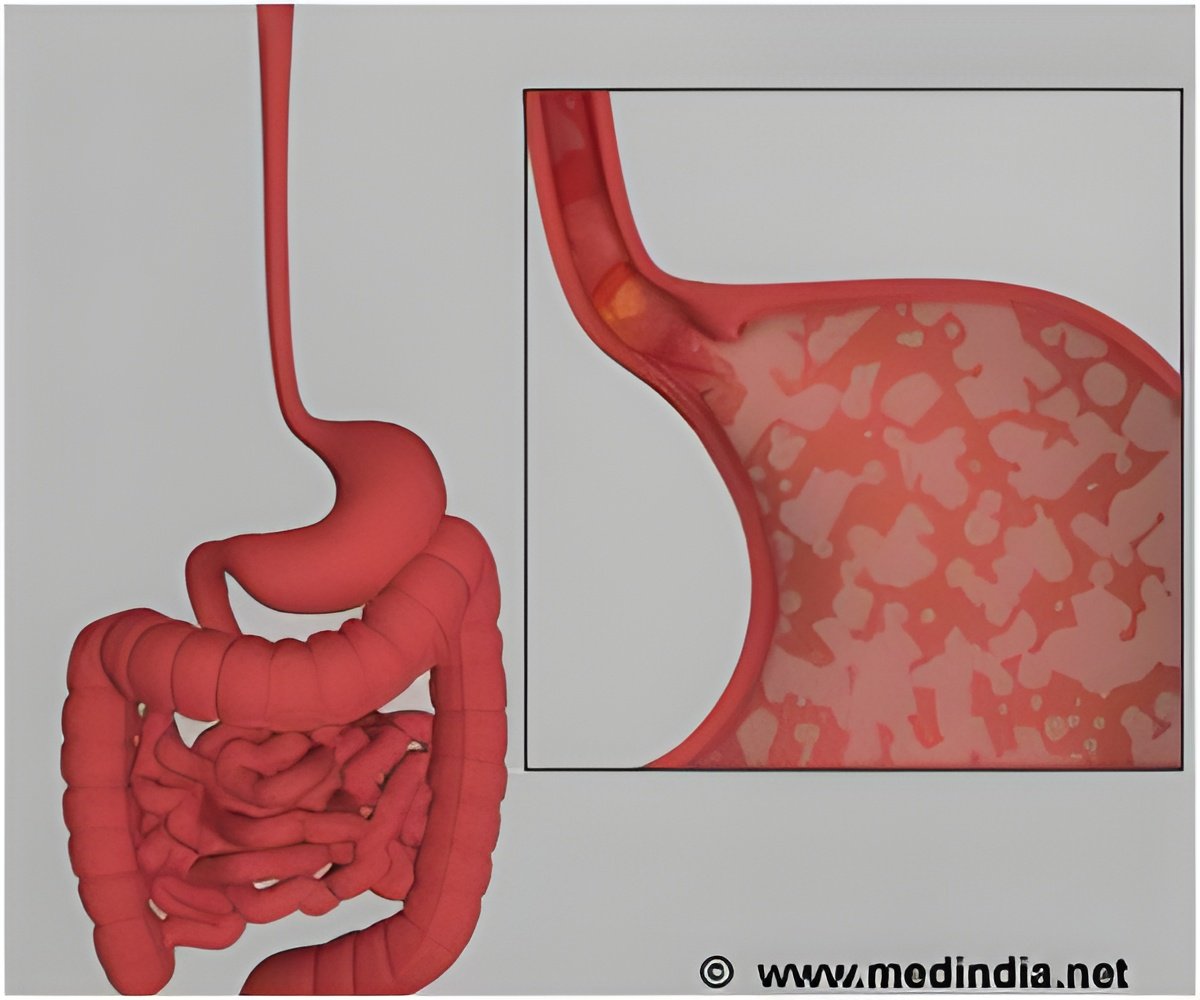

Patients Under Gastroesophageal Reflux Disease Drugs Need To Manage Their Body Weight
Long-term treatment with proton pump inhibitor might make patients with gastroesophageal reflux disease (GERD) fat, reveals a new study.
Long-term treatment with proton pump inhibitor might make patients with gastroesophageal reflux disease (GERD) fat, reveals a new study.
Gastroesophageal reflux disease (GERD) is a key risk factor for esophageal cancer. The specific role of inflammation of the lining of the esophagus from GERD — clinically known as erosive reflux disease — is less clear.
"Although reflux patients with a history of inflammation, irritation or swelling of the esophagus are at increased risk for esophageal cancer, the absolute risk of cancer even in these patients is very low," added Dr. Erichsen.

Gastroesophageal Reflux Disease Does Not Increase Death Risk
People suffering from gastroesophageal reflux disease (GERD) do not have an increased risk of death as compared to people without the disease.
People suffering from gastroesophageal reflux disease (GERD) do not have an increased risk of death as compared to people without the disease.
Source-Eurekalert

New Reflux Guidelines Released
New, updated guidelines for esophageal reflux testing appear in The American Journal of Gastroenterology.
New, updated guidelines for esophageal reflux testing appear in The American Journal of Gastroenterology.

Doctors in UK Promoting Awareness of Gastro-oesophageal Reflux Disease
Heartburn could be a precursor to gastro-oesophageal reflux disease, British doctors warn and note that the diagnosis of the disease is a relatively new phenomenon.
Heartburn could be a precursor to gastro-oesophageal reflux disease, British doctors warn and note that the diagnosis of the disease is a relatively new phenomenon.
 Email
Email