MEDINDIA
 English
 हिन्दी
 Español
 français
 中文
中文
Physicians diagnosing endometrial cancer may believe, not unreasonably, that the best thing they can do for those patients is to operate as soon as possible.

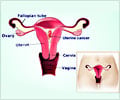
Uterine Cancer / Endometrial Cancer - Symptoms - Risk Factors – Prognosis - Treatment
Uterine Cancer or Cancer of the Uterus (or Endometrial Cancer) refer to cancers affecting the uterus or the womb in women. Learn about the different types of uterine cancer, symptoms, staging, diagnosis, prognosis, treatment, survival rates and news on uterine cancer.
Uterine Cancer or Cancer of the Uterus (or Endometrial Cancer) refer to cancers affecting the uterus or the womb in women. Learn about the different types of uterine cancer, symptoms, staging, diagnosis, prognosis, treatment, survival rates and news on uterine cancer.
TOP INSIGHT

Ensuring patients are healthy for surgery and have access to specialists should take priority over timing.
"We suspect that physicians diagnosing endometrial cancer may believe, not unreasonably, that the best thing they can do for those patients is to operate as soon as possible, because if they wait too long the cancer could progress, resulting in a worse outcome," said senior author David I. Shalowitz, MD, a fellow in Gynecologic Oncology at the Perelman School of Medicine at the University of Pennsylvania. "But, the results of our study suggest that pre-surgical care and referring patients to a gynecologic oncologist may be more important."
This year, over 60,000 women in the United States will be diagnosed with endometrial cancer, or cancer of the lining of the uterus. That number is expected to grow as obesity rates rise, since being obese increases a woman's risk of endometrial cancer, according to the National Cancer Institute. Endometrial cancer generally occurs in post-menopausal women over 50. In many cases, cancer-related symptoms such as abnormal menstruation send women to the doctor, allowing care providers to diagnose the condition early. Overall, the five-year survival rate is 82 percent.
Choriocarcinoma in Females - Causes, Symptoms, Diagnosis, Treatment, Prevention
Choriocarcinoma is a rare uterine cancer following pregnancy. The tumor arises in the trophoblast cells lining the embryo. Vaginal bleeding is a common symptom.
Choriocarcinoma is a rare uterine cancer following pregnancy. The tumor arises in the trophoblast cells lining the embryo. Vaginal bleeding is a common symptom.
Five-year survival rates worsened as time-to-surgery increased, the study found: from 84.5 percent at eight weeks to 82.1 percent at week 11, to 78.6 percent at week 15, for example. There was no increased risk of death for women with high-risk cancers who had surgery after the third week, suggesting that for these women, the type and extent of disease at diagnosis contributes more to survival outcomes than progression of disease during the wait for surgery, the authors said.

Breast Cancer Drug Tamoxifen Does Not Escalate Risk of Uterine Cancer
The commonly spread belief that breast cancer drug Tamoxifen could increase the risk of uterine cancer has been shunned by a recent study.
The commonly spread belief that breast cancer drug Tamoxifen could increase the risk of uterine cancer has been shunned by a recent study.
"Knowledge is power," Shalowitz said. "The primary goal is to make sure that there is a mechanism in place so that women who have a cancer diagnosis can see a specialist in the appropriate time period, that they are able to physically get to a high-volume treatment center, and that the process of referral and medical optimization for surgery can be done expediently."

Sticky Nanoparticles to Fight Ovarian and Uterine Cancer
Nanoparticles that deliver drugs precisely to their targets and then stay there could play a crucial role in fighting ovarian and uterine cancers.
Nanoparticles that deliver drugs precisely to their targets and then stay there could play a crucial role in fighting ovarian and uterine cancers.
 Email
Email