MEDINDIA
 English
 हिन्दी
 Español
 français
 中文
中文
Combining intrathecal morphine and oral gabapentin would provide more effective postoperative pain control than the morphine alone.
TOP INSIGHT

Reducing the number of opioids consumed by adding non-narcotic medications, could be a better option for adolescents undergoing surgery for scoliosis.
Read More..
“Reducing the number of opioids consumed by adding non-narcotic medications, which is termed ‘multimodal pain management,’ makes for a much better experience for adolescents undergoing this procedure for scoliosis."
The adolescents who had rods and screws inserted to fuse their spines into a straighter position would receive narcotics either intravenously or through a catheter that went into the spinal canal after surgery.
Li worked with Rebecca Hong, MD, co-author and clinical assistant professor of anesthesiology at U-M Health, to begin administering morphine intrathecally, or through a single injection into the fluid around the spinal cord, without the need for any IV narcotics after surgery.
With improved pain control, they were able to reduce the average hospital stay to only two days, and the practice became standard at the hospital. Still, side effects persisted among patients.
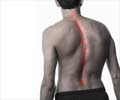
Scoliosis - Facts, Causes, Types, Symptoms & Treatment
Scoliosis is a condition characterized by an abnormal curvature of the spine or backbone to the left or right side.
Scoliosis is a condition characterized by an abnormal curvature of the spine or backbone to the left or right side.
Half were given intrathecal morphine only while the other 25 also received gabapentin before and after the procedure. All patients received Tylenol, ibuprofen, and a muscle relaxant.
The first group also had significantly lower mean total oxycodone consumption during the hospitalization and had more consistent pain scores with fewer reported spikes.
“Our use of intrathecal morphine and transitioning directly to oral pain medications the day after surgery had already led to our patients getting discharged sooner after this surgery than at most other children’s hospitals because their pain was so well-controlled,” Hong said.
“However, we continually seek to improve our process, and our patients’ and their family’s satisfaction with the care they receive here. The addition of gabapentin has helped in regard to both metrics.”
Future studies are needed for clinicians to find the optimal dosing for the gabapentin-intrathecal morphine combination, researchers concluded.
“But the method of reducing opioid intake by adding gabapentin has potential to be considered for other procedures beyond spinal fusion for scoliosis, which is a procedure that approximately 38,000 children in the United States undergo every year," Li said.
“What a lot of providers want is to be able to provide multimodal pain management, not just for kids and orthopaedic surgery,” she said.
“During this opioid epidemic, we want to provide options that include non-narcotics to decrease the amount of narcotics we are prescribing and, ultimately, decrease the amount of leftover narcotics at home that can get into the wrong hands.”
Source-Medindia
 Email
Email