MEDINDIA
 English
 हिन्दी
 Español
 français
 中文
中文
A new study has found that the distribution of cellular organelles is uneven when a bacterial cell divides into two daughter cells.
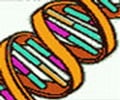
About Genetic Testing
Genetic testing helps to confirm a genetic condition in an individual and involves q complex laboratory techniques
Genetic testing helps to confirm a genetic condition in an individual and involves q complex laboratory techniques
In the latest study, the Miller and his colleagues worked out the molecular mechanism behind the difference in c-di-GMP concentrations seen between daughter cells.
When Pseudomonas cells divide, they pinch in half to create two daughter cells. Although the cells are genetically identical, only one daughter cell can inherit the bacterium's single propeller. The other cell can synthesize its own propeller, but immediately after division the two cells are quite different.
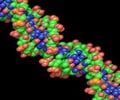
Epigenetics
In the recent years ‘epigenetics’ represents inheritable changes in gene expression that do not include DNA alterations.
In the recent years ‘epigenetics’ represents inheritable changes in gene expression that do not include DNA alterations.
The study has been published in the online journal eLife.
Birth Defects - Genetic - Achondroplasia
Achondroplasia is a genetic disorder which is one of the leading causes of dwarfism
Achondroplasia is a genetic disorder which is one of the leading causes of dwarfism
 Email
Email