MEDINDIA
 English
 हिन्दी
 Español
 français
 中文
中文
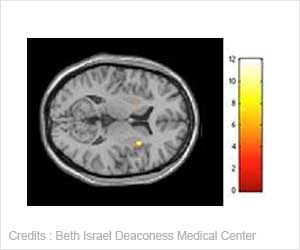
Decline in daily functioning associated with Alzheimer's disease is related to alterations in activity in certain regions of the brain.


Risk Factors for Alzheimers Disease
Cognitively normal adults exhibiting atrophy of their temporal lobe or damage to blood vessels in the brain are more likely to develop Alzheimer’s disease.
Cognitively normal adults exhibiting atrophy of their temporal lobe or damage to blood vessels in the brain are more likely to develop Alzheimer’s disease.
They looked at data from 104 clinically normal elderly participants, 203 participants with mild cognitive impairment, and 95 participants with mild dementia due to Alzheimer's disease. The participants had a baseline PET scan to determine brain activity and underwent clinical assessments every 6 to 12 months for up to three years. The participants' study partners (family members or friends who knew them well) also completed questionnaires about the participants' daily living activities.
The researchers found that decreased activity in frontal areas of the brain, which are responsible for cognitive processing and decision making, and deep temporal and parietal (back) areas of the brain, which are associated with memory, were associated with greater impairment of instrumental activities of daily living initially and over time.

Young Blood to Cure Decline of Aging Brain
A research showed that injections of juvenile mouse blood boosts learning and memory in older rodents, findings that hold the long-sought cure for the decline of ageing brain.
A research showed that injections of juvenile mouse blood boosts learning and memory in older rodents, findings that hold the long-sought cure for the decline of ageing brain.
According to the National Institute on Aging, National Institutes of Health, as many as five million people age 65 and older in the United States have dementia due to Alzheimer's disease. As the rapid growth of the aging population continues, the number of those developing the disease is expected to increase significantly, with the number of people with dementia due to Alzheimer's disease doubling for every five-year interval beyond age 65.
Smokers are at Risk of Alzheimer's Disease
People who smoke are at a greater risk of developing Alzheimer's disease and other forms of dementia.
People who smoke are at a greater risk of developing Alzheimer's disease and other forms of dementia.

Mice Breed Used In Alzheimer�s Disease Research Not That Effective
Scientists opine that recently developed mouse breeds that mimic the symptoms of Alzheimer's disease.
Scientists opine that recently developed mouse breeds that mimic the symptoms of Alzheimer's disease.
 Email
Email