MEDINDIA
 English
 हिन्दी
 Español
 français
 中文
中文
This prestigious designation is an important recognition of the quality of programs that make up Duncan Cancer Center and work done physicians, scientists.
Coal Mining Areas to Get Cancer Centers: Union Minister Piyush Goyal
Minister Goyal invited and requested TMC Kolkata director and other colleagues, trustees of the hospital to consider helping in setting up cancer centers.
Minister Goyal invited and requested TMC Kolkata director and other colleagues, trustees of the hospital to consider helping in setting up cancer centers.
"Texas is the second largest state in the U.S. yet we have very few NCI designated cancer centers compared to other states," said Dr. Kent Osborne, director of the Duncan Cancer Center. "California has 10, seven of which are comprehensive, and four of those in the Los Angeles area. Philadelphia, Chicago and San Diego have several as well. There is room for one more Comprehensive Cancer Center in the fourth largest city in the country and it facilitates collaborations."
A five-year grant of $14.5 million is included in the Comprehensive Cancer Center designation.

Indian-American Couple Donate $1 Million for Cancer Center in University of Arizona
The donation is being used to build the five-story, 2.2 million square-foot facility at the St Joseph’s Hospital and Medical Center in downtown Phoenix.
The donation is being used to build the five-story, 2.2 million square-foot facility at the St Joseph’s Hospital and Medical Center in downtown Phoenix.
University of Texas M.D. Anderson Cancer Center and The University of Texas Southwestern Medical Center in Dallas, were the two additional cancer centers in state awarded comprehensive status this month.

Princess Margaret Cancer Center and Vall D'Hebron Institute of Oncology Partner to Advance Personalized Cancer Medicine
Two internationally acclaimed cancer centers announced a partnership to accelerate academic and clinical research to advance personalized, targeted therapies against cancer.
Two internationally acclaimed cancer centers announced a partnership to accelerate academic and clinical research to advance personalized, targeted therapies against cancer.
"Since the cancer center's inception in 2006, we have always been focused on achieving comprehensive status," said Osborne. "This means you meet the highest standards set forth by the National Cancer Institute. Each cancer center undergoes a rigorous review process to achieve the highly-coveted comprehensive designation."
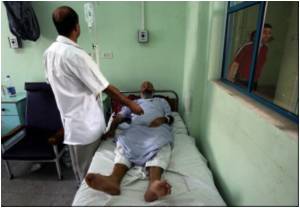
Many Patients in Cancer Centers may Not Experience a Dignified Death: Study
A new study published in Cancer finds many cancer patients do not experience a dignified death.
A new study published in Cancer finds many cancer patients do not experience a dignified death.
Source-Medindia
 Email
Email