MEDINDIA
 English
 हिन्दी
 Español
 français
 中文
中文
Scientists from Emory University School of Medicine says that clot-busting stroke drug tPA can act as a neuroprotectant
Stroke – Early Warning Signs - Risk Factor - Rehab - Treatment
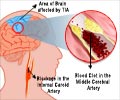
Stroke can cause permanent disability and it is important to recognize its early warning signs to stop its progress. Early warning signs of stroke include sudden weakness of facial muscles.
Stroke can cause permanent disability and it is important to recognize its early warning signs to stop its progress. Early warning signs of stroke include sudden weakness of facial muscles.
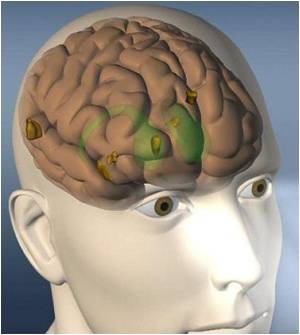
"tPA is not only a drug, it is a natural protein produced in response to hypoxia," says senior author Manuel Yepes, MD, associate professor of neurology at Emory University School of Medicine. "If you look at the parts of brain where the gene for tPA is turned on the most, one of these is the hippocampus. It is well known that the hippocampus is especially vulnerable to hypoxia compared with other regions of the brain. We believe there is a reason for this overlap."
The hippocampus is a structure in the middle of the brain thought to be responsible for memory formation. In mice lacking the gene for tPA, neurons in the hippocampus are more vulnerable to dying after a short simulated stroke lasting 20 minutes, Yepes and his colleagues found. In the laboratory, pre-treatment with tPA protects hippocampal neurons in culture from hypoxia. In contrast, tPA has the opposite effect on neurons from the cortex.
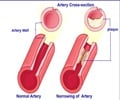
Cholesterol - Lipoproteins - Functions - Normal Blood Cholesterol Levels - Causes - Treatment - FAQs
Cholesterol is produced by the body (liver) and is essential for normal body functioning.
Cholesterol is produced by the body (liver) and is essential for normal body functioning.
Source-ANI
RAS //
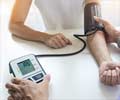
High Blood Pressure
High blood pressure or hypertension is defined as a blood pressure of above 140 mm Hg (systolic) and or 90mm Hg (diastolic).
High blood pressure or hypertension is defined as a blood pressure of above 140 mm Hg (systolic) and or 90mm Hg (diastolic).
 Email
Email