MEDINDIA
 English
 हिन्दी
 Español
 français
 中文
中文
Air pollution might be responsible for premature and low birth weight babies. Avoid high pollution areas or use air filtration systems during the early stages of pregnancy.
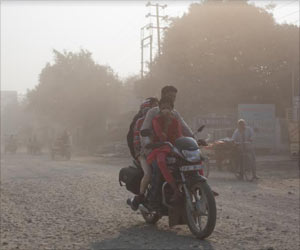
The Link Between Air Pollution and Premature Death
Long-term exposure to certain air pollutants increases the risk of premature deaths at levels below current national standards
Long-term exposure to certain air pollutants increases the risk of premature deaths at levels below current national standards
TOP INSIGHT

Exposure to air pollution which usually comes from car exhaust, coal-fired power plants, and other industrial processes during early pregnancy, may harm babies.
In the study, pregnant mice were randomly assigned to one of two groups-- one exposed to filtered air and a second to concentrated PM2.5. The mice exposed to particles were also randomly assigned for exposure during one of four gestational periods designed to mirror the stages of human pregnancy: period 1(0.5-5.5 days); period 2(6.5-14.5 days); period 3(14.5-16.5 days); or period 4(0.5-16.5 days).
Researchers measured both the duration of pregnancy and birth weight of the offspring to identify the effects of concentrated PM2.5 over the time periods. Their results show that exposure to air pollution during period one resulted in preterm birth for about 83 percent of exposed mouse litters.

Life Expectancy Reduces With Increased Air Pollution: Study
An increase in air pollution decreases victims' life expectancy by 9-11 years more and the estimated cost is 3 times lower in EU when compared to the US.
An increase in air pollution decreases victims' life expectancy by 9-11 years more and the estimated cost is 3 times lower in EU when compared to the US.
Exposure during the first and second trimester also came with decreased body length, decreased placental weight, and decreased anogenital distance, which can reflect abnormal hormone levels, says Blum. Senior study author Judith Zelikoff, PhD, a professor in the Department of Environmental Medicine at NYU School of Medicine stated, "These findings could lead physicians to advise women to avoid high pollution areas or use air filtration systems during the early stages of pregnancy."

Exposure To Contaminated Air Has Adverse Health Effect in Aircrew
The health of aircrew deteriorates as they are suspected to have been exposed to contaminated air during their careers.
The health of aircrew deteriorates as they are suspected to have been exposed to contaminated air during their careers.

Air Pollution Linked to Insulin Resistance in Kids
A new study reveals that children who live in areas that have higher levels of air pollution develop insulin resistance.
A new study reveals that children who live in areas that have higher levels of air pollution develop insulin resistance.
 Email
Email