MEDINDIA
 English
 हिन्दी
 Español
 français
 中文
中文
Researchers make a comparative study showing that calcium channel blockers are more effective at slowing down atherosclerosis than beta-blockers. In
Researchers make a comparative study showing that calcium channel blockers are more effective at slowing down atherosclerosis than beta-blockers. In new research, a group of 1,800 patients were assigned to either lacidipine, a calcium-channel blocker, or atenolol, a beta-blocker. Both drugs are used to treat high blood pressure, but act in different ways. The calcium-channel blocker decreases the rate at which calcium flows into cells and so interferes with the contraction of heart muscles. The beta-blockers make the heart beat more slowly.
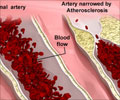
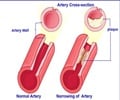
The researchers measured the development of atherosclerosis in the carotid arteries in the neck using ultrasound. In atherosclerosis, fatty plaque thickens the arteries, raising the risk of heart attack or stroke. In the patients on atenolol, the carotid arteries showed an average increase of 0.0145 millimetres a year, compared to 0.0087 millimetres a year in those on lacidipine. This was despite the fact that atenolol was somewhat more effective in lowering the blood pressure. Evidently calcium-channel blockers have benefits in addition to this, and can act on calcium so as to slow down the growth of cells in the inner walls of the arteries. Email
Email