MEDINDIA
 English
 हिन्दी
 Español
 français
 中文
中文
New study provides insights on how stress-related brain activity can temporarily damage the heart.

Broken Heart Syndrome | Takotsubo Syndrome (TTS) - Causes, Symptoms, Diagnosis & Treatment
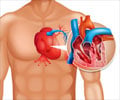
Broken heart syndrome is short-term failure of the heart muscles caused by stress, war, or surgery. Balloon-shaped ventricle is a characteristic symptom.
Broken heart syndrome is short-term failure of the heart muscles caused by stress, war, or surgery. Balloon-shaped ventricle is a characteristic symptom.
TOP INSIGHT

Individuals who had the highest amygdalar activity developed TTS within a year after imaging.
Read More..
Hence, higher activity in the stress-associated centers of the brain suggests that the individual has a more active response to stress," explains senior author Ahmed Tawakol, MD, director of Nuclear Cardiology and co-director of the Cardiovascular Imaging Research Center at MGH.
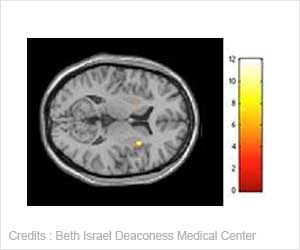
The imaging tests, which were being conducted in patients for other medical reasons, revealed that heightened activity in the brain's amygdala predicted the development of subsequent TTS, as well as the timing of the syndrome.
For example, individuals who had the highest amygdalar activity developed TTS within a year after imaging, while those with intermediate values developed TTS several years later.
"We show that TTS happens not only because one encounters a rare, dreadfully disturbing event--such as the death of a spouse or child, as the classical examples have it. Rather, individuals with high stress-related brain activity appear to be primed to develop TTS--and can develop the syndrome upon exposure to more common stressors, even a routine colonoscopy or a bone fracture," says Tawakol.
In applying the results to the clinic, Tawakol hopes that interventions that lower stress-related brain activity will make it more difficult to develop TTS. "Studies should test whether such approaches to decrease stress-associated brain activity decrease the chance that TTS will recur among patients with prior episodes of TTS," he says.
Source-Eurekalert
 Email
Email