MEDINDIA
 English
 हिन्दी
 Español
 français
 中文
中文
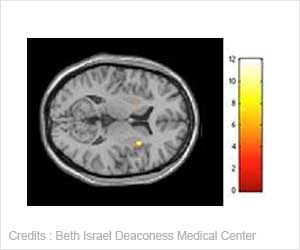
The area of brain affected with the first sign of danger has been better understood with a new study. Parts of brain activated to express fear is also understood.

Top 10 Amazing Brain Facts
The brain is the most amazing and complex organ in this universe and has billions of nerve cells called as neurons. Medindia brings to you the top 10 amazing brain facts.
The brain is the most amazing and complex organ in this universe and has billions of nerve cells called as neurons. Medindia brings to you the top 10 amazing brain facts.
First, they confirmed that the PVT was indeed highly sensitive to threats. They then looked at the neurons in the posterior PVT (pPVT) that were communicating with the lateral division of the central amygdala (CeL), where neuroscientists say is a site of fear memories.
Through a series of experiments that suppressed communications coming from these neurons, they found that the pPVT plays an important role in conditioning the mice to fear certain situations and to remember those fears. They also demonstrated that this knowledge was "hard wired" into the neuronal synapses.

Trypophobia | Fear of Too Many Holes: Causes Symptoms Diagnosis Treatment
Discover all about trypophobia-the strange condition that affects quite a lot of people in the world.
Discover all about trypophobia-the strange condition that affects quite a lot of people in the world.
To test this hypothesis, the researchers created mice without the gene to produce BDNF or without a BDNF receptor.

Fear Expressions Help Identify Threats Quickly
Recent research suggests that widening of eyes in response to fear helps easily identify threats and also helps others in recognizing danger.
Recent research suggests that widening of eyes in response to fear helps easily identify threats and also helps others in recognizing danger.
The communications transmitted by BDNF produced in pPVT neurons and picked up by CeL receptors, the researchers concluded, "facilitate not only the formation of stable fear memories but also the expression of fear responses."

Brilliant Human Brain
The most amazing and complex organ in the entire universe, the human brain continues to remain an enigma.
The most amazing and complex organ in the entire universe, the human brain continues to remain an enigma.
Source-ANI
 Email
Email