MEDINDIA
 English
 हिन्दी
 Español
 français
 中文
中文
The only current treatment for end-stage liver disease is a liver transplant and the number of livers available from deceased donors is limited.
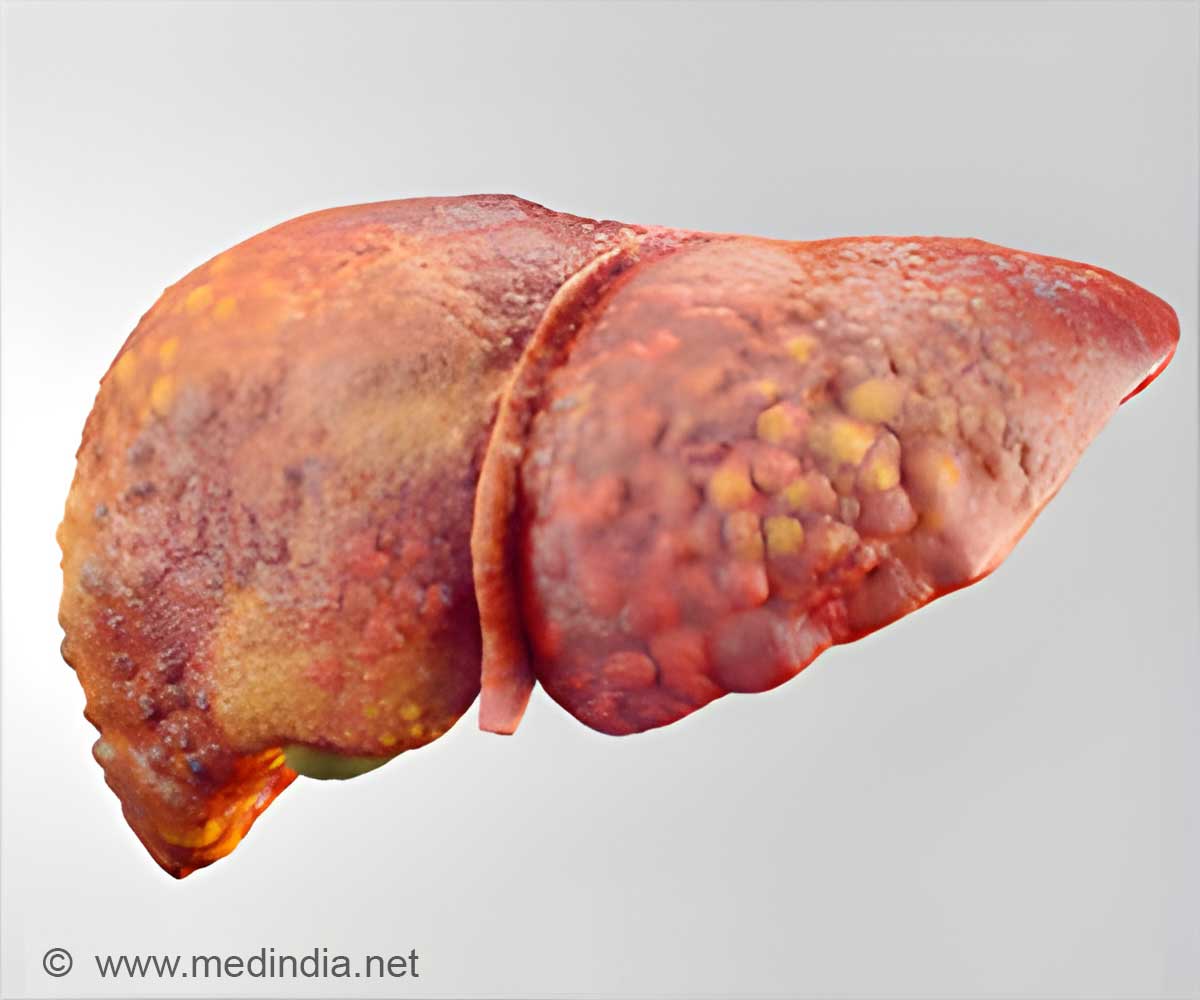
Starch and MUFA Increases Risk of Liver Injury, Fatty Liver Disease
Ingestion of starch and the monounsaturated fatty acid oleate leads to fatty liver disease.
Ingestion of starch and the monounsaturated fatty acid oleate leads to fatty liver disease.
TOP INSIGHT

Liver performs many essential functions related to digestion, metabolism, immunity, and the storage of nutrients within the body. These functions make the liver a vital organ without which the tissues of the body would quickly die from lack of energy and nutrients.
The only current treatment for end-stage liver disease is a liver transplant, and the number of livers available from deceased donors is limited. Because of this, a major goal in regenerative medicine is to attain self-organizing human tissues - in which cells experience a series of coordinated molecular events precisely timed and spaced to form functioning three dimensional liver buds, the authors write.
Nailing down the precise details and context of developmental molecular-cellular crosstalk in the endoderm of an embryo - where livers form - is critical to this technology's therapeutic potential.
Liver Disease Death Rates Doubles Since 1980s: U.S
Liver cancer incidence has been on the rise in the U.S, and is estimated to rise to 41,000 new cancer cases and 29,000 cancer deaths in 2017.
Liver cancer incidence has been on the rise in the U.S, and is estimated to rise to 41,000 new cancer cases and 29,000 cancer deaths in 2017.
Genetic Blueprint
Heart Patients May Indicate a Risk of Liver Disease After Fontan Surgery
Heart patients who undergo Fontan surgery are at a risk of developing liver disease, reveals study.
Heart patients who undergo Fontan surgery are at a risk of developing liver disease, reveals study.
The main advantage of using single-cell RNA-Seq technology is it provides a blueprint of gene activity in each and every cell type. The researchers zeroed in on developing a complete blueprint of active transcription factors (genes that tell other genes what to do) and the signaling molecules and receptors in each of the different cells before and after they come together to form liver tissue.

Here�s How Alcohol and Intestinal Fungi Worsen Liver Disease
The progression of alcoholic liver disease can be prevented by manipulating the balance of fungal species living in a patient's intestine, finds a new study.
The progression of alcoholic liver disease can be prevented by manipulating the balance of fungal species living in a patient's intestine, finds a new study.
Single-cell RNA-Seq analysis also helped researchers benchmark the engineered 3D liver tissues generated from stem cells against naturally occurring human fetal and adult liver cells. Researchers observed that the lab-grown liver buds have molecular and genetic signature profiles that very closely resemble those found in naturally developing human liver cells.
In particular they highlight molecular crosstalk between a signaling protein that cells produce to stimulate formation of blood vessels (VEGF) and a protein and receptor that communicates with VEGF to help trigger formation of a blood supply to the developing liver (KDR). The current study shows the communication between VEGF and KDR is critical to instructing the development and maturation of liver tissues.
Researchers indicate they observed this crosstalk during development of mouse liver cells, natural human liver cells and in their bioengineered livers.
"Our data reveals, in exquisite resolution, that the conversation between cells of different types changes the cells in a way that likely mimics what is going on during human development," said Treutlein at Max Planck. "There is still a lot left to learn about how to best generate a functioning human liver tissue in a dish, nevertheless, this a big step in that direction."
Natural vs. Bioengineered
The authors noticed the gene expression landscape in the generated liver buds - such as precisely where and when genes express themselves - did not completely match natural human liver cells. The remaining gaps between natural and bioengineered tissues may come from different developmental cues caused by the unique microenvironment of cells developing in a petri dish versus that of cells developing in a person or animal.
The new cellular and molecular data uncovered in the current study will be "exploited in the future to further improve liver bud organoids" and "precisely recapitulate differentiation of all cell types" in fetal human development, the authors write.
Source-Eurekalert
 Email
Email