MEDINDIA
 English
 हिन्दी
 Español
 français
 中文
中文
A new study reveals that soldiers returning from Iraq and Afghanistan who have experienced mild traumatic brain injury (TBI) had measurable abnormalities in the white matter of their brains.

Brain Exercises to Improve Memory
An active brain can certainly help in improving memory by strengthening the connections between neural impulses in brain.
An active brain can certainly help in improving memory by strengthening the connections between neural impulses in brain.
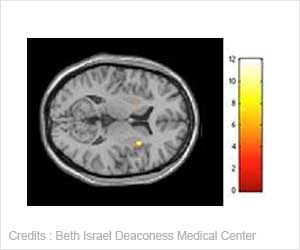
Jorge and his colleagues used an MRI-based brain-scanning technique called diffusion tensor imaging (DTI) to study the brains of 72 veterans with mild TBI and 21 veterans without mild TBI. DTI measures the diffusion of water along thin fibers known as axons that form connections between brain cells. When axons are intact, water flow (diffusion) follows the axon boundaries and has a well-defined directionality. When the axon is damaged, water diffuses in many directions, a situation referred to as low fractional anisotropy.
"Decreased directionality of the water diffusion is a measure of lower integrity in the white matter," Jorge says.

About Brain Tumor
Brain tumors are the abnormal growth of brain cells that may be benign or metastatic. Brain tumors account for about 2.4% of all the tumor diagnosesandare most challenging due to their critically delicate location.
Brain tumors are the abnormal growth of brain cells that may be benign or metastatic. Brain tumors account for about 2.4% of all the tumor diagnosesandare most challenging due to their critically delicate location.
Veterans with mild TBI had a significantly more potholes than veterans without TBI. The difference in the number of potholes was not influenced by age, time since trauma, a history of mild TBI unrelated to deployment, or coexisting psychological problems like depression, anxiety, or PTSD. The number of potholes did, however, correlate with poorer performance on cognitive tests measuring decision-making and planning skills.

Brain Food
It is a myth that the brain quits generating new cells once you reach adulthood. They are regenerating all the time.
It is a myth that the brain quits generating new cells once you reach adulthood. They are regenerating all the time.
Although the results suggest that DTI measurements might hold promise as a tool for detecting and tracking mild TBI in the brain, Jorge cautions that the current study is not large or specific enough to confirm that DTI-detected potholes are a biomarker for TBI brain damage.

Brilliant Human Brain
The most amazing and complex organ in the entire universe, the human brain continues to remain an enigma.
The most amazing and complex organ in the entire universe, the human brain continues to remain an enigma.
Source-Eurekalert
 Email
Email