MEDINDIA
 English
 हिन्दी
 Español
 français
 中文
中文
Physicians are eager to find non-surgical ways to help the two-thirds of kidney stone patients who need more than just extra hydration to pass their stones.
New Guidelines for Physicians Treating Patients With Kidney Stones
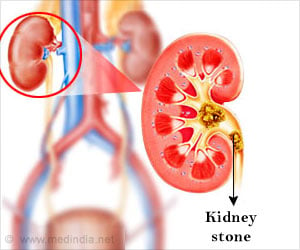
A new guideline for the surgical management of patients with kidney and/or ureteral stones has been released by the by the American Urologic Association.
A new guideline for the surgical management of patients with kidney and/or ureteral stones has been released by the by the American Urologic Association.
TOP INSIGHT

Physicians are eager to find non-surgical ways to help the two-thirds of kidney stone patients who need more than just extra hydration to pass their stones.
Hollingsworth and his team put that 2015 study into the context of other kidney stone research, pooling a total of 55 randomized controlled trials comparing alpha blockers to placebo or control. They then considered stone size and location in the 5,990 study subjects to see if either one was a factor in successfully passing the stone. "We found alpha blockers were successful, but the benefit is primarily in patients with larger kidney stones," says co-author Benjamin K. Canales, M.D., associate professor of urology at the University of Florida College of Medicine.
Researchers reported a 57 percent higher risk of stone passage for larger stones with an alpha blocker, but no benefit for smaller stones. Location did not make a difference, nor did type of alpha blocker used. "This data helps me better identify the patients who are likely to benefit from alpha blockers," Hollingsworth says. "It's important to consider stone size when deciding whether to recommend alpha blockers to kidney stone patients."
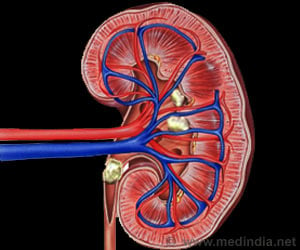
Measuring Intestinal Calcium Absorption Helps Identify People at Kidney Stones Risk
Measuring intestinal calcium absorption may help to identify individuals who are prone to develop kidney stones, revealed a study.
Measuring intestinal calcium absorption may help to identify individuals who are prone to develop kidney stones, revealed a study.
Source-ANI
Kidney Stones Increasing Among Youth, Especially in Females and African-Americans
Kidney stones are increasing, particularly among adolescents, females, and African-Americans in the U.S., a striking change from the historic pattern.
Kidney stones are increasing, particularly among adolescents, females, and African-Americans in the U.S., a striking change from the historic pattern.
Have Sex 3 to 4 Times a Week To Get Rid Of Kidney Stones
IF you've ever suffered from kidney stones, you'll understand they're one of the most painful conditions to try and deal with - but there is a new cure.
IF you've ever suffered from kidney stones, you'll understand they're one of the most painful conditions to try and deal with - but there is a new cure.
 Email
Email