MEDINDIA
 English
 हिन्दी
 Español
 français
 中文
中文
The WHO estimates that more than six million deaths per year are linked to exposure to outdoor and indoor air pollution.


Air Pollution - Pollutants - Health Effect - Efforts to Reduce
Nearly 2.4 million deaths every year are attributable to air pollution. Air pollutants may be solid particles, liquid droplets or gases. Proper planning methods should be adopted to reduce air pollution.
Nearly 2.4 million deaths every year are attributable to air pollution. Air pollutants may be solid particles, liquid droplets or gases. Proper planning methods should be adopted to reduce air pollution.
TOP INSIGHT

Urging governments to cut the number of vehicles on the road, improve waste management and promote clean cooking fuel could reduce air pollution.
"Fast action to tackle air pollution can't come soon enough," she added, urging governments to cut the number of vehicles on the road, improve waste management and promote clean cooking fuel.
The report based on data collected from more than 3,000 sites across the globe found that "92 percent of the world's population lives in places where air quality levels exceed WHO limits".

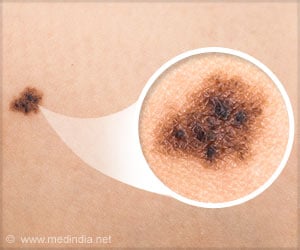
Air Pollution and Cancer Incidence: a Danish Cohort Study
Air pollution is on the increase and so are the associated risks. A recently published study links air pollution near residence and cancer.
Air pollution is on the increase and so are the associated risks. A recently published study links air pollution near residence and cancer.
The WHO has estimated that more than six million deaths per year are linked to exposure to outdoor and indoor air pollution. Data is more solid for outdoor pollution, which is blamed for more than three million fatalities annually. But indoor pollution can be equally as harmful, especially in poorer developing world homes where cooking often involves burning charcoal.
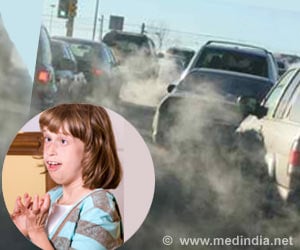
Traffic Related Air Pollution Causes Autism in Infants
Autism is characterized by developmental disturbances in social interaction, behavior and language. Air pollutants exposure can lead to autism development in infants and during pregnancy.
Autism is characterized by developmental disturbances in social interaction, behavior and language. Air pollutants exposure can lead to autism development in infants and during pregnancy.
Carlos Dora, coordinator at the WHO's public health and environment department, said that some of the strategies adopted to safeguard against polluted air have limited effectiveness. For example, daily air quality warnings -- like those sometimes issued in Beijing -- likely do little to help the average person, since the real threat is exposure to sub-par air over extended periods.

Pollution Increases the Risk to Heart Ailments
A recent study suggests that higher PM10 and NO2 (traffic associated pollutants) levels are associated with increase in myocardial infarction risk just 1–6 hours later following the exposure.
A recent study suggests that higher PM10 and NO2 (traffic associated pollutants) levels are associated with increase in myocardial infarction risk just 1–6 hours later following the exposure.
 Email
Email