MEDINDIA
 English
 हिन्दी
 Español
 français
 中文
中文
Maternal mortality in India points out there is a 'yawning gulf between commendable maternal mortality policies and their urgent, focused, sustained, systematic and effective implementation'.

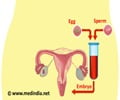
In Vitro Fertilization (IVF) - Introduction To Infertility and Reproduction
Encyclopedia section of medindia gives a brief introduction to infertility and reproduction
Encyclopedia section of medindia gives a brief introduction to infertility and reproduction
Examples of using law to promote accountability and good practice are described in a paper from Latin America reporting on landmark decisions by the UN Committee on the Elimination of Discrimination Against Women (CEDAW) calling for appropriate maternal health care (Brazil) and decriminalisation of abortion to safeguard women's health (Peru). These are promising examples of the application of human rights to demand government responsibility for maternal deaths and to assert the rights of women not to die in pregnancy, childbirth and unsafe abortion.
Furthermore a new emphasis on evidence-based practice is described in several papers, providing grounds for optimism. It suggests there is a real desire to improve outcomes and the hope that new initiatives may have a greater chance of success in saving women's lives. Without the political commitment to addressing equity, however, important initiatives will continue to fail the poorest and most marginalised women. As one author notes, "The death of a woman due to pregnancy complications is not just a biological fact it is also a political choice."

Tissue Engineered Scaffolding Allows Reproduction of Cartilage Tissue
A new study examines the use of tissue-engineered scaffolding made of cartilage cells, which have a limited ability to heal naturally
A new study examines the use of tissue-engineered scaffolding made of cartilage cells, which have a limited ability to heal naturally
Source-Eurekalert

Reproduction Problems in Female Offspring Linked to BPA Exposure
A new mice study has found that exposure to Bisphenol A (BPA) during pregnancy leads to epigenetic changes that may cause permanent reproduction problems for female offspring.
A new mice study has found that exposure to Bisphenol A (BPA) during pregnancy leads to epigenetic changes that may cause permanent reproduction problems for female offspring.

Long-Term Benefits Observed With Sexual Reproduction
The reason why courtship rituals might actually be worth it has been discovered by researchers.
The reason why courtship rituals might actually be worth it has been discovered by researchers.
 Email
Email