MEDINDIA
 English
 हिन्दी
 Español
 français
 中文
中文
Zika virus present even in previously infected women who tested negative for the virus in previous laboratory tests, says study.


Zika Fever - Causes, Symptoms, Diagnosis, Treatment and Prevention
Zika virus is transmitted to humans by infected mosquitoes which causes mild fever with maculopapular rash. No treatment or vaccine is currently available.
Zika virus is transmitted to humans by infected mosquitoes which causes mild fever with maculopapular rash. No treatment or vaccine is currently available.
TOP INSIGHT

Zika virus continues to replicate during pregnancy, in the fetus or the placenta but the viral load in the mother's fluids is very low and hence not detectable.
The patients included 13 women in different stages of pregnancy (4 weeks to 38 weeks) who were receiving treatment at the Children's & Maternity Hospital (HCM) of São José do Rio Preto.
According to Nogueira, the virus was detected in one patient's urine for as long as seven months. In five women, the test was again positive for Zika virus after their viral load had disappeared in previous tests. In all cases, the virus vanished from the women shortly after they gave birth.

Antibody Identified That Is Effective Against Both Dengue And Zika Virus Infection
Anti-dengue virus antibody identified, that is effective and protects from both dengue as well as Zika virus infections.
Anti-dengue virus antibody identified, that is effective and protects from both dengue as well as Zika virus infections.
According to Nogueira, if the result of a molecular test is negative, it should ideally be repeated at least twice at intervals of no less than a week.
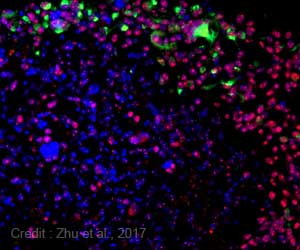
Zika Virus may Hold the Key to Treat Brain Cancer
Zika virus could be a promising treatment for glioblastoma, which is the most common form of brain cancer, finds a new study.
Zika virus could be a promising treatment for glioblastoma, which is the most common form of brain cancer, finds a new study.
Three of the women monitored for the study had babies with complications that were probably caused by Zika: two displayed hearing loss and one was born with a brain cyst.

Fetal Harm In Zika Virus Infection During Pregnancy Related To Maternal Immunosuppression
Zika virus smothers immune system in pregnant women, causing severe abnormalities in fetus as well as other pregnancy related complications.
Zika virus smothers immune system in pregnant women, causing severe abnormalities in fetus as well as other pregnancy related complications.
Polyvalent test
A new rapid test that identifies Zika virus in blood samples as well as all four serotypes of dengue virus during the acute phase of infection is described by a multinational group of researchers, including Nogueira, in an article recently published in the journal Science Translational Medicine.
According to the authors, the method is low-cost and entails no risk of a cross-reaction, unlike other tests. Consisting of a dipstick strip with antibodies that change color in the presence of a viral protein known as NS1, the immunochromatography test was developed at the Massachusetts Institute of Technology (MIT) in the United States.
The method was validated by research institutions in several countries, including FAMERP. "We validated it in tests on blood samples from patients with a confirmed diagnosis of both Zika and dengue attending the São José do Rio Preto general hospital for treatment," Nogueira said.
Source-Eurekalert
 Email
Email