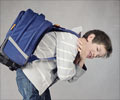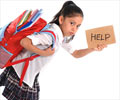


 Backpacks are a better option than shoulder bags for carrying books to school. Shoulder bags put the weight on one side of the body and this can cause abnormalities in the growing bones.
Select a bag that is lightweight so that it does not contribute much to the overall weight. Designer school bags may look great but the weight factor of the bags is of primary importance.

Ideally the backpack must have two straps that are thick and evenly spaced. Thin straps can dig into the muscles around the shoulders, resulting in reduced blood flow and thus adversely affecting the nerves.
The backpack can have a waist-clip/hip belt, which can help in reducing the space between the child's back and the bag. Increased distance between the two can make the bag sway more; causing the child to lose balance while walking.
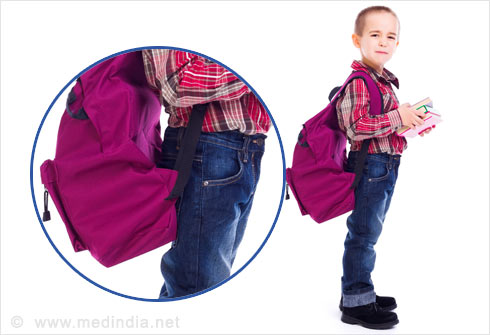


Pack only those books that you really need for the day, not just anything that can fit into it.
Parents can help the child plan for the day and arrange their books in line with the subjects that are to be taken for the day.

Pack the heaviest books closer to the back and the lighter books towards the outside. This can prevent the swaying away of the bag due to the weighing down of books.
Use all the big and small compartments of the bag to distribute the weight evenly. This may not actually reduce the weight of the bag, but help spread the weight across a broader region thus making it easier to carry.

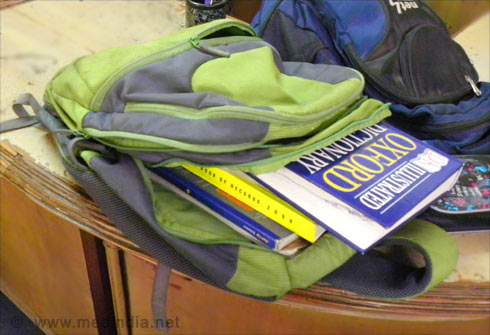
Adding extra books will surely add to the weight. The list may be large-sized dictionaries, hardbound storybooks and textbooks that are not required for the day.
If you must carry storybooks, choose smaller and lighter books.

While carrying the bag, children must stand straight. They must not stoop forward or bend backwards, as both of these practices may cause harm to the growing bones.
Never carry the bag on one side as there is a possibility of bending of the spine.

 MEDINDIA
 English
 हिन्दी
 Español
 français
 中文
中文
 Email
Email