Stem Cells - Fundamentals | |
What is an Embryonic Stem Cells? |
|
Text
|
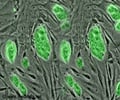
Human embryonic stem cells are derived from fertilized embryos less than a week old. This can be done by using blastocysts obtained from donated, surplus embryos produced by in vitro fertilization.
Such embryos are produced in the 'test-tubes' for infertile couples, but often more numbers of embryos are produced than needed and stored in case there is abortion of implanted embryo. By having multiple embryos there in no requirement of taking out egg or sperm and going though the whole process. Embryonic stem cells, derived from surplus embryos, can be programmed to become any cell type of the body. They also have the capacity to keep proliferating indefinitely in a culture medium. Embryonic stem cells are derived from the cells that make up the inner cell mass of the blastocyst. Embryonic stem cells are undifferentiated cells that are unlike any specific adult cell and are of great interest to science because of their ability to develop into virtually any other cell type made by the human body. These embryonic stem cells can proliferate indefinitely in culture and can produce unlimited source of cells that can differentiate into specific and important adult cells such as bone, muscle, liver or blood cells. Mouse embryonic stem cells are capable of generating to any cell types in the body. So, they are called as pluripotent and have unlimited potential as far as growth and differentiation. Human embryonic stem cell lines are currently being studied and several research teams are working to determine whether or not they possess the same properties as mouse embryonic stem cells. Important application of human embryonic stem cell would be in the field of drug discovery. As these cells have the ability to grow and produce specific cell types. Embryonic stem cells help to know the developmental events in humans, which would help to prevent or treat birth defects, infertility and pregnancy loss. A thorough knowledge of normal development could ultimately allow the prevention or treatment of abnormal human development. |
| Share it! |
|
|
|
|


|
Posted by:
Anandkumarsrivastava
Posted on: 04/25/2012 I am based in Delhi. How can I avail of your services? how about the costs etc? A.K. Srivastava
Reply |
Forward
Posted by:
reejatharu
Posted on: 08/24/2010 we can get totipotent stem cells from human embryos that are created invitro in ART labs.
Posted by:
guest
Posted on: 08/30/2010 Hello, I am a c2/c3 quad on a ventilator. I have been paralyzed for 15 years as a result from fooling with a friend. I writing to find about any type of human spinal cord rejuvenation trials. If so or any type along that line, then please let me know. Thanks |
|
Posted by:
Namithann
Posted on: 05/25/2010 A fertilised egg has totipotency, or total potential for about four days. Days after fertilisation,the totipotent stem cell divides and then matures to cause more specialised stem cells called pluripotent stem cells.Basically, the pluripotent stem cell can do everything the totipotent one can except for creating an entire organism. so, how can we take totipotent cells frm a human? is tht practically possible? if we could, it wud be great, isn't it?
Posted by:
guest
Posted on: 10/08/2007 ESC research only "does not involve cloning" if you redefine 'cloning.' Most people understand that it is making a 'copy' of someone's DNA. To use ESC's therapeutically, they must be 'recognized' by the cells of the end user - the simplest way is to 'clone' his/her DNA. And insert it into an available egg (and where are all these human eggs going to come from? 3rd-world women?) |
| Related Links | ||||||||
|
| Citing this Health Article | ||||||
|
||||||