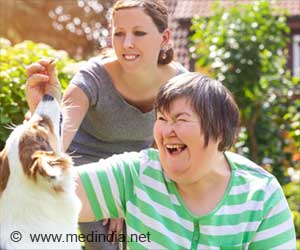
The entire world is a stage, and we are mere actors, echoed The Bard, eons ago. As the curtains go down slowly for those in the grips of this crippling disease, today on World Alzheimer’s day, the stage is set for deep reckoning; it is time to take the bull by its horns and evolve better strategies for effective management of the disease.
Alzheimer’s is a degenerative disease of the central nervous system marked by stark and untimely backslide in the patient’s mental capabilities. It is estimated that nearly 2 to 4 million persons suffer age related dementia, out of which nearly two-thirds have Alzheimer's disease. Alzheimer's Disease is the most notorious of dementias, which sets in gradually leading to an irreversible memory loss, abnormal behavioral and personality changes, combined with a steep fall in intellectual /thinking abilities.The risks of Alzheimer’s disease go up with age and become pronounced after the age of 65. Two main risk factors of Alzheimer’s disease include a strong family history of dementia and Down’s syndrome. Patients with Alzheimer's disease encounter grave problems with memory, judgment, and structured thought process that make it extremely difficult to lead a normal life. Additionally there may be fluctuations in mood and changes in behavior. The rate of progression of the disease varies with each person; therefore it is important to diagnose early to realize better treatment outcomes.
Although there is no known cure for Alzheimer’s, research shows that the quality of care can have a far-reaching impact on the patients. Adopting a person-centered approach that promotes independence, taking adequate care not to crush the individuality of the person with dementia, is the corner stone of treatment measures. The caregivers should be suitably trained to handle patients suffering this disease. Perpetuation of care by the staff, which fosters trust and builds a relationship between the caregivers and the patient, is extremely crucial. As the patient advances into the disease, it is only the caregivers who can provide the security that a patient needs.
Care for a person with dementia can be extremely daunting, all the same, enhancing the role of the family members and caregivers for the person's physical needs. In Alzheimer's disease, the person could become completely dependant on the caregiver, and it is here that the role of education, support and training, helps the family cope with events that follow.
Presently there is no magic pill that can reverse the advancement of Alzheimer's disease. The best bet so far combines the expertise of psychotherapy, environmental changes and medication. The pitfalls of drug therapy for patients who are already suffering memory impairment can get worse because of the inability to remember to take a drug, and more so if the drug is to be taken many times in the course of a day. Behavioral approaches are beneficial to calm down the intensity of certain difficult behaviors, often portrayed as aggressive, and even unbecoming manifestations in conduct. It is here that the caregiver can play a proactive role in comprehending underlying triggers, and assist in keeping them at bay. Evolving methods to simplify complex tasks- such as dressing or feeding - into easy convenient activities, reducing clutter and confusion goes a long way in reducing the challenge of caring for patients with Alzheimer’s. Activities that induce pleasure such as games and music, is known to have a positive effect on the mood, allaying potential fears and depression.
Modifying the environment is extremely imperative for patients suffering from this disease. Potentially dangerous instruments, chemicals, and tools should be put away to ensure safe living environment of the patients. Finally, family members or care givers of patients are often at the receiving end, and may harbor feelings of resentment, guilt, frustration, and anger, also engulfed by an overwhelming sense of sadness at what has befallen a dear one. Not surprising that many of the caregivers end up depressed themselves. It is here that the support groups can rise to the occasion to uplift those who have selflessly cared for patients who are on the brink of sinking into oblivion.
Advertisement
SAV