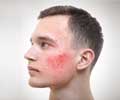
Patients with acne have a reason to smile – new combinations of medicines for local use have been found to be effective.
Treatment of acne is directed towards its cause. Acne occurs due to the following reasons: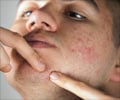
Acne - Causes Symptoms Diagnosis Treatment FAQs Videos Glossary Reference
Acne vulgaris, popularly known as ‘pimples’ or ‘zits’ is a skin condition affecting most teenagers.
Acne vulgaris, popularly known as ‘pimples’ or ‘zits’ is a skin condition affecting most teenagers.
• Blockage of the pores due to increased cellular proliferation, resulting in the formation of comedone or blackhead
• Growth of a bacterium called P. acnes within the hair follicles
• Inflammation
Drugs used in acne act through different mechanisms:
Advertisement

Benzoyl Peroxide
This medication is a keratolytic agent with antibacterial actions, prescribed for acne.
This medication is a keratolytic agent with antibacterial actions, prescribed for acne.
• Dapsone acts by reducing inflammation. It may also reduce the levels and activity of P. acnes.
Advertisement
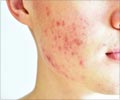
Acne - First Aid Treatment Guide
A quick and simple First Aid guide on how to administer treatment for Acne.
A quick and simple First Aid guide on how to administer treatment for Acne.
• Retinoids such as adapalene, tazarotene and tretinoin act at multiple sites to treat acne. They reduce the cellular proliferation, inhibit formation of comedones and have anti-inflammatory effect. Retinoids are now available as emollient creams and microsphere gel to reduce irritation and improve efficacy.
If a combination of medications is used, it will not only be effective through multiple mechanisms, it will also help to simplify treatment and improve patient adherence to treatment.
A combination of benzoyl peroxide and clindamycin has been found to be more effective than benzoyl peroxide alone. Benzoyl peroxide, through its effect on bacteria, may also help to reduce bacterial resistance when used in combination.
A combination of clindamycin phosphate 1.2%, an antimicrobial and tretinoin 0.025% has been approved for the treatment of acne. Clindamycin acts as an antibacterial and anti-inflammatory agent, whereas tretinoin acts against comedones. The treatment has been found to be effective in various studies.
The combination is applied once a day either in the morning or at bedtime. Side effects include acne flare, sunburn, allergic reaction, skin reactions and increased sensitivity to ultraviolet light. The combination should not be used in patients suffering from Crohn’s disease, ulcerative colitis, colitis with previous antibiotic use, and use of erythromycin containing products at the same time.
A combination of the drug adapalene 0.1% with benzoyl peroxide 2.5% has been recently approved for use as a once-a-day treatment in the US and Canada. Adapalene acts against comedones as well as has anti-inflammatory properties. The combination acts on multiple mechanisms: It prevents comedone formation, growth of bacteria and inflammation. The most common adverse effect associated with this combination is dry skin.
Thus, combinations of anti-acne medications for local applications have not only been found to be effective, they may also probably increase patient’s adherence to treatment.
Reference:
1. Fu LW and Vender RB. Newer Approaches in Topical Combination Therapy for Acne. http://www.skintherapyletter.com/2011/16.9/2.html
Source-Medindia