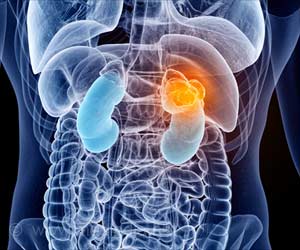

Tumor Markers - For Cancer Diagnosis and Prognosis
An ideal tumor marker for a cancer should be specific to that cancer and not generate false positive results.
An ideal tumor marker for a cancer should be specific to that cancer and not generate false positive results.
To understand why so-called biomarker "breakthroughs" have not made it to the clinic, Eleftherios P. Diamandis, M.D., Ph.D., professor of pathology and laboratory medicine at Mount Sinai Hospital in Toronto and associate scientist at the Samuel Lunenfeld Research Institute of Mount Sinai Hospital reviewed some biomarkers initially hailed as breakthroughs and their subsequent failings.
Diamandis first describes the requirements for biomarkers to be approved for clinical use: A biomarker must be released into circulation in easily detectable amounts by a small asymptomatic tumor or its micro-environment; and it should preferably be specific for the tissue of origin. Also, if the biomarker is affected by a non-cancer disease, its utility for cancer detection may be compromised. For example, the prostate-specific antigen (PSA) biomarker, which is used to detect prostate cancer, is also elevated in benign prostatic hyperplasia.

Testicular Cancer - Risk Factors - Symptoms - Diagnosis - Staging - Treatment - Prognosis
A person with testicular cancer may have a testicle that is three times its original size. The most cited risk factor is undescended testes.
A person with testicular cancer may have a testicle that is three times its original size. The most cited risk factor is undescended testes.
Diamandis concludes that "problems with pre-analytical, analytical, and post-analytical study design could lead to the generation of data that could be highly misleading."
Advertisement

Smoking and Cancer - Causes - Passive Smoking - FAQs - Video
Smoking is the most important preventable cause of cancer in the world.
Smoking is the most important preventable cause of cancer in the world.
Source-Eurekalert

Ovarian Cancer | Cancer in the Ovaries - Causes, Symptoms, Treatment & Prevention
Ovarian cancer affects both the ovaries and is referred to as the 'silent killer' as the symptoms go unnoticed until the disease advances.
Ovarian cancer affects both the ovaries and is referred to as the 'silent killer' as the symptoms go unnoticed until the disease advances.