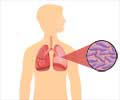
A team of scientists has claimed a significant breakthrough in their research into the spread of tuberculosis, by identifying for the first time that TB bacteria accumulate "fat" that may help them to survive passing from one person to another and boost their resistance to anti-TB drugs.
Researchers from the University of Leicester, together with colleagues from St Georges, University of London, funded principally by the Medical Research Council (MRC) and The Wellcome Trust, say that their findings challenge the established view that the TB bacteria coughed up in sputum by infected individuals are rapidly multiplying."Strenuous efforts are being made to reduce the global burden of tuberculosis, a disease which kills four people every minute. Our success so far has been limited for many reasons; one of these is our failure to control the spread of TB from one person to another. Very little is known about this vital part of the bacterium's life cycle," lead investigator Professor Mike Barer, Professor of Clinical Microbiology in the Department of Infection, Immunity and Inflammation at the University of Leicester said.
"If scientists could understand more about the transmission of TB between people, they might identify new therapeutic and preventative targets," he added.
The Leicester team discovered that, unlike TB bacteria growing in test tubes, many of the bugs in sputum are loaded with fat droplets. They went on to show with their colleagues in London that these 'fat bacilli' were in an inert non-growing state, a condition in which they are more likely to survive the process of passing from one person to another.
The discovery explains the story of "persister bacteria" in TB - a mysterious population believed by many to be the reason why TB patients have to be treated for at least six months.
Professor Barer said: "These surprising findings have opened the door for us to develop new ways to stop TB from spreading and to treat it more effectively. We hope that our new ability to monitor these sleepy and resistant bacteria in sputum will enable us to treat the disease more quickly."
Advertisement
The study has been funded principally by the Medical Research Council (MRC) and The Wellcome Trust and its findings will be published in the Journal, Public Library of Science Medicine.
Advertisement
SRM/L