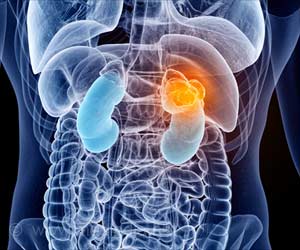
In an animal study, researchers at UT Southwestern Medical Center have found that a mutation in a single gene can cause endometrial cancer that is responsive to a specific drug therapy.
The researchers said that the finding suggests that eventually it might be possible to screen women with endometrial cancer to see if they have that mutation and use the drug as targeted therapy.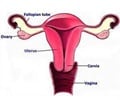
Endometrial Cancer
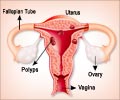
Cancer of the Endometrium, or the inner lining of the uterus (womb) is called endometrial cancer.
Cancer of the Endometrium, or the inner lining of the uterus (womb) is called endometrial cancer.
"Some early clinical trials have shown that about one-fifth of women with endometrial cancers respond to a group of drugs called 'rapalogs.' Unfortunately, it is not currently possible to predict which women these are," Dr. Castrillon added.
Endometrial cancer affects the lining of the uterus. This cancer is the most common cancer of the female reproductive tract and is usually detected when a woman complains of excessive bleeding. About one-third of ovarian cancer cases are believed to begin as endometrial cancer, Dr. Castrillon said. The median survival of women with advanced endometrial cancer is one year.
In the current study, the researchers genetically engineered mice to inactive Lkb1 only in the endometrium. Without Lkb1, the entire endometrium became cancerous early and rapidly, they found.
Advertisement

Quiz on Cancer
Cancer, is the second most leading cause of death worldwide. Cancer is not just one disease but many diseases. There are more than 100 different types of cancer. Take this quiz on and test how much you know about cancer.
Cancer, is the second most leading cause of death worldwide. Cancer is not just one disease but many diseases. There are more than 100 different types of cancer. Take this quiz on and test how much you know about cancer.
"We hope that someday a test based on this gene or others like it might pinpoint which women would respond best to treatment with 'rapalogs'. Such personalized medicine could spare other women from unnecessary chemotherapy if their tumours are unresponsive to the drugs," Dr. Castrillon said.
Advertisement

Cancer Key Facts and Statistics
Cancer is an abnormal cell growth and it can destroy other body tissues. 1 in 6 deaths that occur in the world is due to cancer. Here are some key facts and statistics about cancer
Cancer is an abnormal cell growth and it can destroy other body tissues. 1 in 6 deaths that occur in the world is due to cancer. Here are some key facts and statistics about cancer
Source-ANI
SRM