A study appearing in an upcoming issue of the Clinical Journal of the American Society Nephrology (CJASN) says that abnormalities in the kidneys and their blood vessels occur in at least 25% of healthy individuals.
While most of these conditions are not harmful enough to prevent someone from donating a kidney, future studies are needed to determine their impact on long-term health.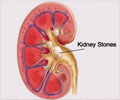
Kidney Stones / Renal Stones - Causes - Symptoms - Diagnosis - Treatment - FAQs
A kidney stone is a solid mass made up of tiny crystals and may appear in any area of the urinary system.
A kidney stone is a solid mass made up of tiny crystals and may appear in any area of the urinary system.
The investigators found that abnormalities in the kidneys and renal arteries were quite common, occurring in at least 1 in 4 adults. Kidney stones were the most common abnormality and were present in 1 in 10 adults. Some abnormalities such as narrowing of the renal arteries, scars in the kidney, and masses in the kidney (several of which were early cancers) were found more often in patients over 50 years of age. Other abnormalities were more common in women than men.
The majority of these abnormalities were mild and were not causing the individuals any discomfort. More than 73% of these abnormalities were not harmful enough to prevent kidney donation, and only rarely did physicians prescribe medications to treat renal artery abnormalities or to prevent further kidney stone formation and growth.
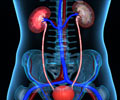
Cysts - Dysplastic Kidneys
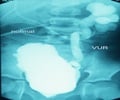
Ultrasound scan reveals multiple cysts and there is no function on that kidney when tested on DMSA scan. A vast majority of them resolve spontaneously.
Ultrasound scan reveals multiple cysts and there is no function on that kidney when tested on DMSA scan. A vast majority of them resolve spontaneously.
Study co-authors include Terri Vrtiska, MD, John Lieske, MD, John Dillon, MD, Mark Stegall, MD, Xujian Li, and Eric Bergstralh (Mayo Clinic).
Advertisement

Dialysis - Hemodialysis, Peritoneal Dialysis and Role of Diet and Drugs
Dialysis is an artificial process for removing excess water and waste from the blood. Hemodialysis and peritoneal dialysis are the types of dialysis.
Dialysis is an artificial process for removing excess water and waste from the blood. Hemodialysis and peritoneal dialysis are the types of dialysis.
The article, entitled "Prevalence of Renal Artery and Kidney Abnormalities By Computed Tomography among Healthy Adults," will appear online at http://cjasn.asnjournals.org/ on January 14, 2009, doi 10.2215/CJN.07641009.
Advertisement
Founded in 1966, the American Society of Nephrology (ASN) is the world''s largest professional society devoted to the study of kidney disease. Comprised of 11,000 physicians and scientists, ASN continues to promote expert patient care, to advance medical research, and to educate the renal community. ASN also informs policymakers about issues of importance to kidney doctors and their patients. ASN funds research, and through its world-renowned meetings and first-class publications, disseminates information and educational tools that empower physicians.
Source-Newswise
RAS