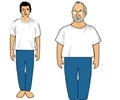
Not getting enough sleep or spending less time in rapid eye movement (REM) sleep, could cause children and teens to suffer from obesity, as per a new study.
According to lead researcher Xianchen Liu and his colleagues, in just 30 years the obesity rate has tripled among children aged 6 to 11 years, with about 17 percent of U.S. adolescents becoming overweight or obese.
REM Behavior Disorder
REM Behavior Disorder (RBD) is a sleep disorder in which the person acts out dramatic or violent dreams during Rapid Eye Movement (REM) sleep.
REM Behavior Disorder (RBD) is a sleep disorder in which the person acts out dramatic or violent dreams during Rapid Eye Movement (REM) sleep.
Liu, M.D., Ph.D., of the University of Pittsburgh School of Medicine Department of Psychiatry and Western Psychiatric Institute and Clinic of the University of Pittsburgh Medical Centre, and colleagues, conducted a number of studies on 335 children and adolescents age 7 to 17 years (average age 10.8).
Their studies discovered that there is an association between fewer hours of sleep and higher body mass index (BMI) in both adults and children.

Stages of Sleep
When we sleep we go through various stages namely NREM sleep and REM sleep, which alternates every 90-120 minutes.
When we sleep we go through various stages namely NREM sleep and REM sleep, which alternates every 90-120 minutes.
It was discovered that a total of 49 participants (14.6 percent) were at risk of becoming overweight and 45 (13.4 percent) were overweight.
Advertisement

Obstructive Sleep Apnea
Obstructive sleep apnea occurs when the tissue in the back of the throat collapses completely blocking the airway. Obstructive sleep apnea is treated using continuous positive airway pressure.
Obstructive sleep apnea occurs when the tissue in the back of the throat collapses completely blocking the airway. Obstructive sleep apnea is treated using continuous positive airway pressure.
They also had lower sleep efficiency (percentage of time in bed that an individual is asleep), shorter REM sleep, less eye activity during REM sleep and a longer wait before the first REM period.
Advertisement

Epworth Sleepiness Scale
Measure your daytime sleepiness using this simple interactive tool, based on Epworth Sleepiness disorder Scale. Excessive Daytime Sleepiness is a type of hypersomnia characterized by persistent sleepiness and lack of energy.
Measure your daytime sleepiness using this simple interactive tool, based on Epworth Sleepiness disorder Scale. Excessive Daytime Sleepiness is a type of hypersomnia characterized by persistent sleepiness and lack of energy.
"Although the precise mechanisms are currently under investigation, the association between short sleep duration and overweight may be attributed to the interaction of behavioural and biological changes as a result of sleep deprivation," the authors write.
Sleep loss causes changes in hormone levels that may affect hunger, and also provides an individual with more waking hours in which to eat. In addition, sleep loss contributes to fatigue the following day, which may decrease physical activity and calorie expenditure.
"Given the fact that the prevalence of overweight among children and adolescents continues to increase and chronic sleep insufficiency becomes more prevalent in modern society, family- and school-based sleep interventions that aim to enhance sleep hygiene and increase sleep duration may have important public health implications for the prevention and intervention of obesity and type 2 diabetes in children," the authors conclude.
"Furthermore, our results demonstrate an important relationship between REM sleep and high BMI and obesity, suggesting that the short sleep-obesity association may be attributed to reduced REM sleep time and decreased activity during REM sleep," the authors concluded.
The report has been published in the August issue of Archives of General Psychiatry, one of the JAMA/Archives journals.
Source-ANI
SRM