MEDINDIA
 English
 हिन्दी
 Español
 français
 中文
中文
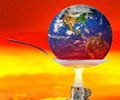
Research scientists say that climate change that leads to degraded conditions could contribute to civil strife, and, worse, armed conflict.
International-security experts have suggested that climate-change-related damage to global ecosystems and the resulting competition for natural resources may increasingly serve as triggers for wars and other conflicts in the future.
According to Jurgen Scheffran, a research scientist in the Program in Arms Control, Disarmament and International Security and the Center for Advanced BioEnergy Research at the University of Illinois, "The impact of climate change on human and global security could extend far beyond the limited scope the world has seen thus far."
Environmental Birth Defects - Chemical Factors - Biological Sources - Diagnosis - Treatment - FAQs
Birth defects caused due to environmental teratogens like drugs, microorganisms or exposure to radiation are called as environmental birth defects.
Birth defects caused due to environmental teratogens like drugs, microorganisms or exposure to radiation are called as environmental birth defects.
They were: degradation of freshwater resources, food insecurity, natural disasters and environmental migration.
He also cited last year's report by a working group of the Intergovernmental Panel on Climate Change indicating that climate change would affect species and ecosystems worldwide, from rainforests to coral reefs.

How to Boost People Participation in Environment Protection Programs?
People are more likely to help save the environment when they are told about others' participation in conservation .
People are more likely to help save the environment when they are told about others' participation in conservation .
"Water supplies stored in glaciers and snow cover in major mountain ranges such as the Andes and Himalayas also are expected to decrease," he said.

Do Not Underestimate the World's Ponds in Trapping Carbon
A new insight has shown that the world's ponds are capable of absorbing the same amount of carbon as the oceans world over.
A new insight has shown that the world's ponds are capable of absorbing the same amount of carbon as the oceans world over.
According to Scheffran, the degradation of these critical resources, combined with threats to populations caused by natural disasters, disease and crumbling economic and ecosystems, could ultimately have "cascading effects."

Malaysian Environmentalists Oppose Warrior Mosquito Plan to Combat Dengue
Environmentalists have condemned a trial plan to deploy millions of genetically modified mosquitoes in Malaysia to fight dengue fever, a report said Sunday.
Environmentalists have condemned a trial plan to deploy millions of genetically modified mosquitoes in Malaysia to fight dengue fever, a report said Sunday.
"The associated socio-economic and political stress can undermine the functioning of communities, the effectiveness of institutions, and the stability of societal structures. These degraded conditions could contribute to civil strife, and, worse, armed conflict," he added.
In fact, according to Scheffran, there's evidence that such dramas are already playing out on the world stage.
"Large areas of Africa are suffering from scarcity of food and fresh water resources, making them more vulnerable to conflict," he said.
"Other regions of the world - including the Middle East, Central Asia and South America - also are being affected," he added.
With so much at stake, Scheffran recommends multiple strategies for forestalling otherwise insurmountable consequences.
Among the most critical, according to him, is for governments to incorporate measures for addressing climate change within national policy.
Beyond that, he advocates a cooperative, international approach to addressing concerns.
Source-ANI
SPH
 Email
Email