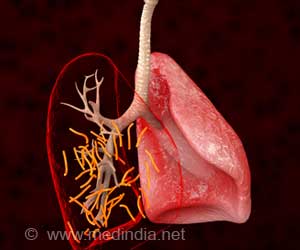
The cause for severe asthma has been identified by researchers at the Cincinnati Children's Hospital Medical Center, who had used mice in their study.


Asthma - Factors, Common Allergens, Diagnosis, Treatment, Support Groups, FAQs
It's a lung condition characterized by inflammation of the bronchi and constriction of the airways that result in coughing, wheezing or breathlessness. Allergy and other airway irritants can trigger it
It's a lung condition characterized by inflammation of the bronchi and constriction of the airways that result in coughing, wheezing or breathlessness. Allergy and other airway irritants can trigger it
Airway exposure to environmental allergens causes dysfunctional regulation of a gene called complement factor 3 (C3). This leads to overzealous production of IL-17A by airway cells and sets off what the scientists describe as an "amplification loop," when IL-17A in turn induces more C3 production at the airway surface.
The amplification loop perpetuates increasing inflammatory responses as well as airway hyper-responsiveness and airflow obstruction.

Asthma Management
Metered Dose Inhalers(MDI), which delivers medictions directly to the lungs, can be most effectively used in the treatment of asthma.
Metered Dose Inhalers(MDI), which delivers medictions directly to the lungs, can be most effectively used in the treatment of asthma.
The study is published in the latest Nature Immunology.
Advertisement

Quiz on Asthma
Asthma is a chronic condition in which the airways become narrow and swollen and may produce extra mucus. This can lead to breathing difficulties and trigger coughing...
Asthma is a chronic condition in which the airways become narrow and swollen and may produce extra mucus. This can lead to breathing difficulties and trigger coughing...