MEDINDIA
 English
 हिन्दी
 Español
 français
 中文
中文
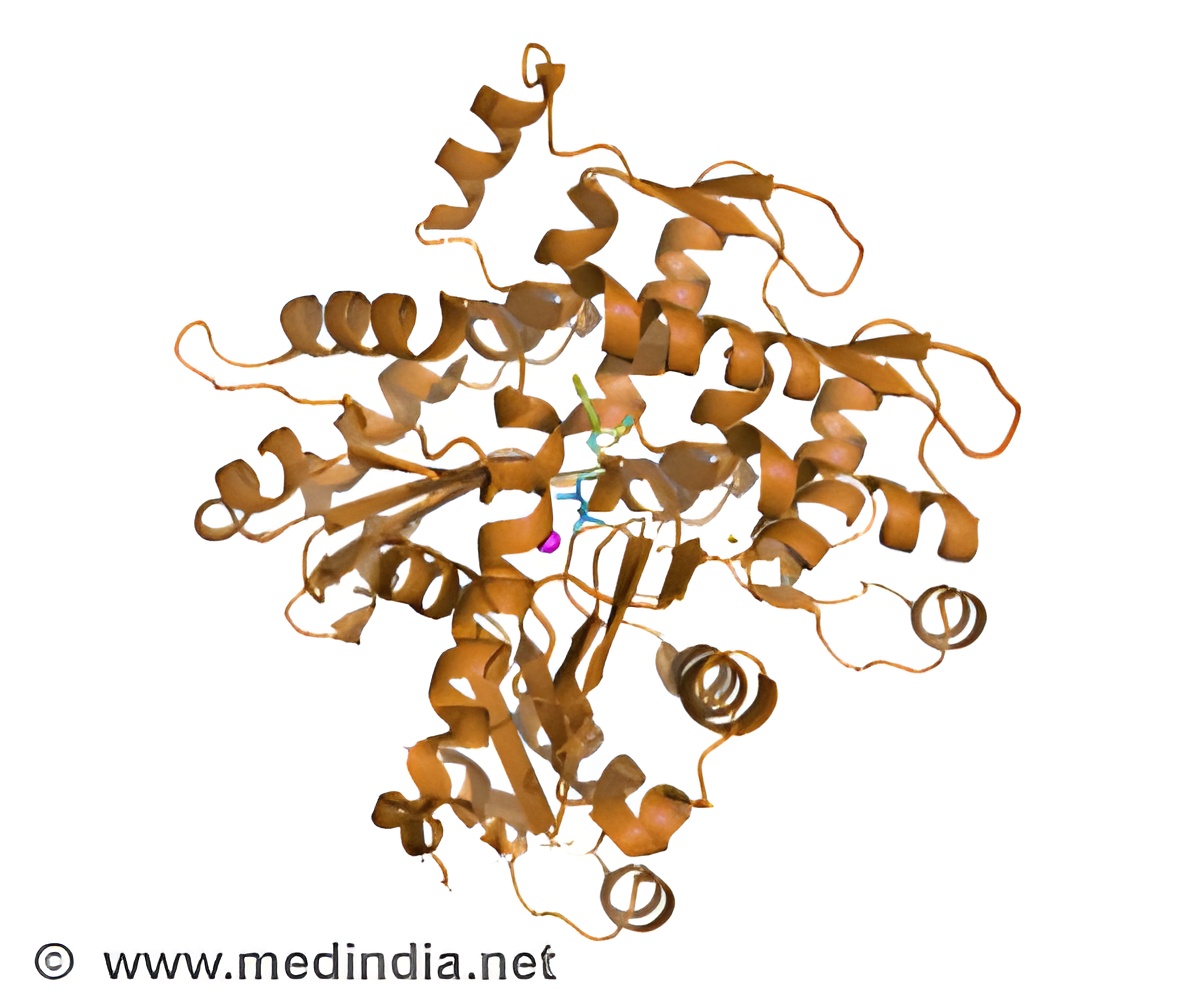
New technology developed by a team of McGill University scientists shows potential to streamline the analysis of proteins, offering a quick, high volume and cost-effective tool to hospitals and research labs alike.

X-ray Laser Opens New View on Alzheimer's, Parkinson�s Proteins
A new experimental method permits the X-ray analysis of amyloids, a class of large, filamentous biomolecules which are an important hallmark of diseases such as Alzheimer's and Parkinson's.
A new experimental method permits the X-ray analysis of amyloids, a class of large, filamentous biomolecules which are an important hallmark of diseases such as Alzheimer's and Parkinson's.
TOP INSIGHT

New technology shows potential to streamline the analysis of proteins, offering a quick, high volume and cost-effective tool to hospitals and research labs alike.
Now, PhD candidate Milad Dagher, Professor David Juncker and colleagues in McGill's Department of Biomedical Engineering have devised a technique that can detect hundreds of proteins with a single blood sample.
Part of their work, just published in Nature Nanotechnology, describes a new and improved way to barcode micro-beads using multicolour fluorescent dyes. By generating upwards of 500 differently coloured micro-beads, their new barcoding platform enables detection of markers in parallel from the same solution--for example, a blue barcode can be used to detect marker 1, while a red barcode can detect marker 2, and so on. A laser-based instrument called a cytometer then counts the proteins that stick to the different coloured beads.

New Protein Analysis Tool Could Help Detect Changes in Protein Abundances
“IonStar”- The new protein analysis tool could quantify and compare proteins abundances in the bodies of people who are healthy and ill, finds a new study.
“IonStar”- The new protein analysis tool could quantify and compare proteins abundances in the bodies of people who are healthy and ill, finds a new study.
"Current technologies hold a major trade-off between the number of proteins that can be measured at once, and the cost and accuracy of a test", Dagher explains. "This means that large-scale studies, such as clinical trials, are underpowered because they tend to fall back on tried-and-true platforms with limited capabilities."

Protein Analysis Offers Targeted Treatment for Eye Disease
Protein analysis called proteomic profiling allows targeted treatment for a rare eye disease, neovascular inflammatory vitreoretinopathy (NIV).
Protein analysis called proteomic profiling allows targeted treatment for a rare eye disease, neovascular inflammatory vitreoretinopathy (NIV).
Source-Eurekalert

Lifetime Risk Calculator for Cancers
What are your chances for developing some common cancers in your lifetime - find out now.
What are your chances for developing some common cancers in your lifetime - find out now.
 Email
Email