
Colorectal Cancer Screening with Flexible Sigmoidoscopy
Flexible sigmoidoscopy is an endoscopic procedure used to screen individuals for colorectal cancer suspected to be in sigmoid colon.
Flexible sigmoidoscopy is an endoscopic procedure used to screen individuals for colorectal cancer suspected to be in sigmoid colon.
‘Research like this helps scientists better understand the intricacies of our immune system and how it can be utilised to kill cancer cells.’
Read More..Tweet it Now
Published in Immunity, scientists examined the molecular and cellular mechanisms underpinning this activity as part of an experimental study of immunotherapy in mice, funded by Cancer Research UK.Read More..
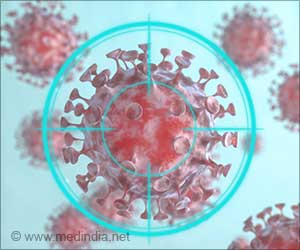
Researchers found that IL-2, a 'growth factor' for T cells and the 'transcription factor' Blimp-1, are responsible for initiating potent killer activity in CD4+ T cells within cancerous tumors.
Co-lead author, Professor Sergio Quezada (UCL Cancer Institute), said: "We knew these immune cells had the ability to kill cancer cells with incredible potency proactively, but to maximize their potential, we needed to know how this mechanism was activated.

Consumption of Red Meat Increases Breast Cancer Risk
Red meat consumption has long been suspected of contributing to cancer development. Find out how much red meat is too much.
Red meat consumption has long been suspected of contributing to cancer development. Find out how much red meat is too much.
T cells are a subset of lymphocytes (white blood cells), which play a key role in the body's immune response. In immunotherapy, T cells are modified and used to attack cancer. These cells move around our bodies, looking for infected cells, and killing them. However, T cells do not recognize most cancers, since cancers develop from our own tissues and appear normal to most T cells.
Advertisement

Colorectal Cancer Screening with Colonoscopy
Colonoscopy is a widely used endoscopic procedure to screen individuals for colorectal cancer. It is very sensitive in detecting colorectal cancers.
Colonoscopy is a widely used endoscopic procedure to screen individuals for colorectal cancer. It is very sensitive in detecting colorectal cancers.
"Much remains unknown regarding how best to optimize these therapies, particularly to enable better activity in solid organ cancers. "Our findings broaden our understanding of the regulators of T cell differentiation, illuminating new elements that might be targeted to enhance therapeutic efficacy."
Advertisement
Colorectal Cancer Screening with Double-Contrast Barium Enema
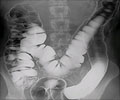
Double-contrast barium enema is a radiological technique that can be used to screen individuals for colorectal cancer and is performed when colonoscopy is not possible.
Double-contrast barium enema is a radiological technique that can be used to screen individuals for colorectal cancer and is performed when colonoscopy is not possible.
"This work in the lab adds to growing evidence for the potential of immunotherapy and will hopefully lead to the development of more effective treatments for people affected by cancer."
Source-Eurekalert