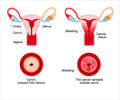
Cervical Cancer - Types, Causes, Symptoms, Diagnosis, Treatment, Complications & Prevention
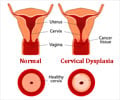
Cancer cervix refers to cancerous growth in the cervix and usually occurs in the transition called squamo-columnar junction.
Cancer cervix refers to cancerous growth in the cervix and usually occurs in the transition called squamo-columnar junction.
‘Children born to parents with high occupational standing faced higher risks of melanoma and prostate cancer and, for women, greater risks of breast cancer.’
Tweet it Now
The study found that for those born in neighborhoods with low socioeconomic status in relation to those from high status neighborhoods, women faced greater risks of invasive cervical cancer. In these low SES neighborhoods, men faced lower risks of prostate cancer, and overall (both sexes) the risk of melanoma was lower. The researchers used the Utah Population Database (UPDB), a unique computerized research resource that contains records from many sources, including genealogies, Utah birth and death certificates, hospitalization records, and driver's license data, to analyze cancer incidence of the study group.
The study evaluated data from individuals who were born in Salt Lake and Weber Counties during 1945-1959 and who survived and lived in Utah until at least age 18. Demographic data were linked to cancer incidence information catalogued in the Utah Cancer Registry to evaluate cancer trends in the general population compared to the study group.

Pap smear and Cervical Cancer Screening
Pap smear is the most common test used in screening cervical cancer caused by an infection with human papilloma virus. Pap smear should be repeated every 1 to 3 years till the age of 65 years.
Pap smear is the most common test used in screening cervical cancer caused by an infection with human papilloma virus. Pap smear should be repeated every 1 to 3 years till the age of 65 years.
Smith noted that the association between SES and breast, cervical, and prostate cancer might reflect SES differences in participation in cancer screening. He also said the importance of critical periods in a child's development may be affected by exposures and living conditions that can lay the foundation for later cancer risk and contribute to social differences in cancer risk.
Advertisement

Prostate Cancer Screening
PSA (Prostate Specific Antigen) test and Digital Rectal Examination are two tests that allow detection of prostate cancer at early stages.
PSA (Prostate Specific Antigen) test and Digital Rectal Examination are two tests that allow detection of prostate cancer at early stages.

Prostate Cancer: Treatment Options - Surgery, Radiation Therapy, Hormone Therapy
Treatment options of prostate cancer includes waiting, surgery, radiation, hormone therapy, chemotherapy, cryosurgery or biologic therapy.
Treatment options of prostate cancer includes waiting, surgery, radiation, hormone therapy, chemotherapy, cryosurgery or biologic therapy.