Aberrant Connectivity Between Key Regions of the Brain Responsible for Major Depressive Disorder
Decreased connectivity between emotion processing regions of the brain maybe responsible for major depressive disorder especially in women.
Decreased connectivity between emotion processing regions of the brain maybe responsible for major depressive disorder especially in women.
"We have discovered that patient cells proliferate faster - they are running with a faster speed to their clock controlling the cell cycle - and we have identified some of the molecules that are responsible," explained Dr. Alan Mackay-Sim from the National Centre for Adult Stem Cell Research in Brisbane, Australia, an author of the study. The findings clearly indicate that the natural cell cycle is dysregulated in individuals diagnosed with schizophrenia.
"This is a first insight into real differences in patient cells that could lead to slightly altered brain development," Mackay-Sim added. This is an important finding, as scientists are already aware of many developmental abnormalities in the 'schizophrenia brain'.
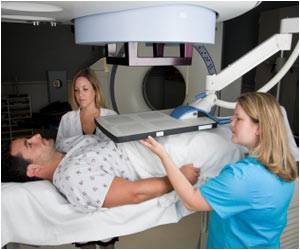
Radiosurgery Gifts Hope for Severe Obsessive-Compulsive Disorder (OCD)
In radiosurgery - “gamma knife” is used to deliver an intense beam of radiation to anterior cingulate cortex – an area of brain that causes OCD symptoms.
In radiosurgery - “gamma knife” is used to deliver an intense beam of radiation to anterior cingulate cortex – an area of brain that causes OCD symptoms.
Source-Eurekalert

Child Abuse - When God�s Gifts Land in Devils� Clutches
Every second child in India had been a victim of some form of abuse. Worse still, more than 50% of the children had been subjected to sexual abuse of different kinds.
Every second child in India had been a victim of some form of abuse. Worse still, more than 50% of the children had been subjected to sexual abuse of different kinds.

Report: Tripoli Psychiatric Hospital Overwhelmed by War Fallout
With a flood of new cases brought on by the revolution's battles, as well as a lack of drugs, staff and space, Tripoli's sole psychiatric hospital struggled on Sunday.
With a flood of new cases brought on by the revolution's battles, as well as a lack of drugs, staff and space, Tripoli's sole psychiatric hospital struggled on Sunday.