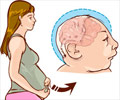
Heavy drinking during pregnancy could mean serious problems for the child. The situation is acute in Germany, and hence many are calling for a concerted campaign to fight the disastrous trend.
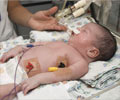
Every year, almost 4000 babies in Germany are born with alcohol-related defects. The mothers of these children have often drunk alcohol regularly during the pregnancy. The consequences are often devastating and commonly persist into adulthood.
Pregnancy and Diet/Diet during Pregnancy – Healthy Foods, Foods to Avoid
Pregnant women should pay special attention to their diet. The diet before and during pregnancy should be rich in calories, proteins, vitamins and minerals.
Pregnant women should pay special attention to their diet. The diet before and during pregnancy should be rich in calories, proteins, vitamins and minerals.
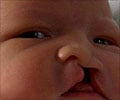
Despite intensive research, the precise pathogenetic mechanism of intrauterine alcohol damage remains to be clearly established. Affected neonates are too small and underweight, with craniofacial deformities. A narrowed palpebral fissure and a thin upper lip are typical manifestations. The children's physical and mental development is delayed, the research paper says.
Many children so affected are poor learners or they display conspicuous behavior. Psychiatric and neurological disorders such as depression and epileptic seizures occur with increased frequency in them.
Longitudinal studies confirm the horrible consequences of intrauterine alcohol exposure into adulthood. These consequences are independent of the initial phenomenological diagnosis in childhood, and limit opportunities for independent living for affected individuals.
Fetal alcohol spectrum disorders are therefore a lifelong diagnosis, whose significance needs to be borne in mind by doctors if affected individuals are to receive available help for their numerous problems.
Advertisement
Fetal alcohol syndrome (FAS) is probably the commonest congenital childhood anomaly involving reduced intelligence.
Advertisement

Binge Drinking in Early Pregnancy Boosts Baby's Risk of Oral Clefts
Pregnant women who binge drink early in their pregnancy increase the likelihood that their babies will be born with oral clefts, according to a new study by researchers at the National
Pregnant women who binge drink early in their pregnancy increase the likelihood that their babies will be born with oral clefts, according to a new study by researchers at the National
_ Alcohol can also act as a behavioral teratogen (a drug or other substance capable of interfering with the development of a fetus, causing birth defects), leading to attention and behavioral disorders even without obvious anatomical abnormalities.
_ The fetal alcohol spectrum disorders (FASD) are under-diagnosed in practice.
_ The most severe type, i.e. fetal alcohol syndrome itself is, in principle, avoidable.
_ Since no causal treatment exists for FASD, early detection of affected children and education, not only for the women concerned but also in the wider population, form the cornerstone of prevention.
_ The fetal alcohol spectrum disorders mean persistent, in many cases lifelong, physical and psychopathological disorders.
Treatment is focused on the prevention of secondary dysfunctions, in particular due to reduced intelligence and associated behavioral difficulties. To this end, intensive psychosocial intervention is indicated, persisting into adulthood. An interdisciplinary approach, involving psychosocial as well as medical services, is essential.
Finally, widespread public health information about the damaging consequences of alcoholism particularly in pregnancy is important, not only for pregnant women but for the population at large.
This is the only way to definitive prevention and, in order to realize this, cooperation between doctors and self help groups is particularly helpful. Key societal and political agencies and the media must also be involved in the public health campaign, the authors said.
Source-Medindia
GPL/S